

It’s been five years since I left the country. The last time was also for a trip to Asia, for work. Again in September. Although just after returning that time, the world would soon shut down completely and I was left wondering if I had brought back or encountered the virus that would change the world forever. The Corona Virus.
Deadly as it was, COVID 19 prompted some useful changes in the world. One of them being to somewhat normalize using a mask in public spaces (i.e. airplanes and public transit), as well as making it possible for my job in eduction to be remote. Everyone was suddenly forced to become proficient in Zoom meetings, but luckily too, it didn’t quite take away the need for in-person recruitment around the globe. There just doesn’t seem to be a way to replicate a warm smile and a handshake, in person, when recruiting international students.
I was fortunate to be asked to go on this trip for work again and set out on a 12-hour flight between Seattle and Incheon (ICN). Leaving around noon from Seattle, we flew into the future 13 hours and I gazed upon Korean soil for the first time around 3 pm the following day. Towering apartment buildings dappled the countryside. In fact, there were so many clusters of these buildings together it somewhat triggered Trypophobia from the airplane view above. There was green everywhere, and crashing ocean waves as we flew in on the sunny September day. I would later find out about some of the horrors that wash up on that shore.
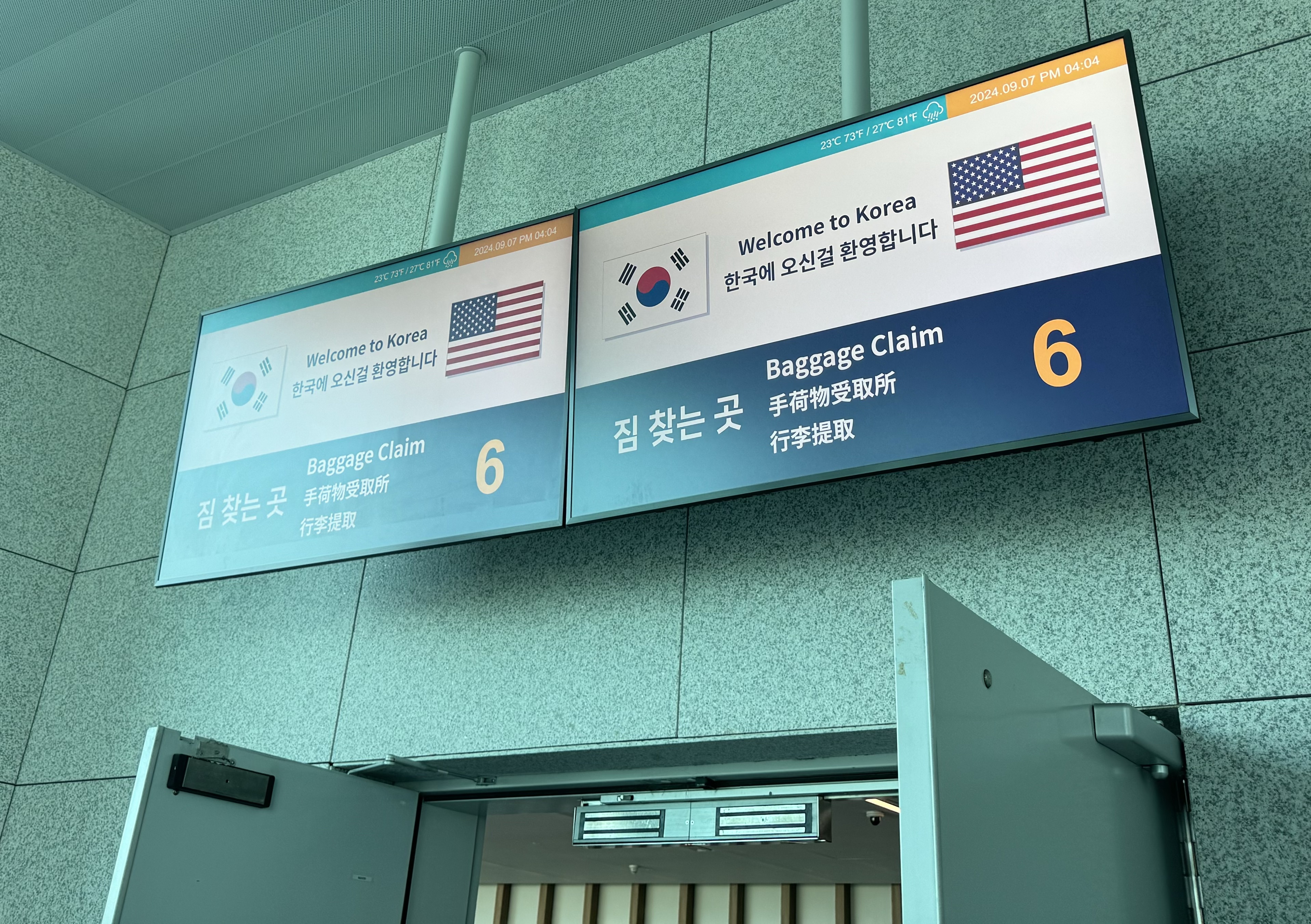
I arrived late Saturday evening and took the train from the airport in Incheon (ICN) to Seoul Station, near by hotel. I wasted no time in my adventures and hopped straight onto a DMZ tour as soon as I could to start the week. I drug my jet lagged and overly excited self from the hotel to Myeongdong Station, using the Naver app to maneuver my way through the big city streets. Google Maps is not useful in Korea (Korea doesn’t allow Google access to that data). And luckily Verizon has a wonderful Global Pass option, that allowed my phone to be used just as I always do, upon arrival. No sim card needed.
I had read how safe Korea was and felt immediately at ease setting out at 5:45 am towards the meeting point in the dark morning hours. Although the sun was coming up, the towering downtown buildings shaded the streets and alleys for some time. Women were scrubbing the floors in front of their shops, some women were jogging, some going to work. It was as if there were solo women everywhere that morning, from locals to travelers with their rolling suitcases clacking along the bricks behind them.
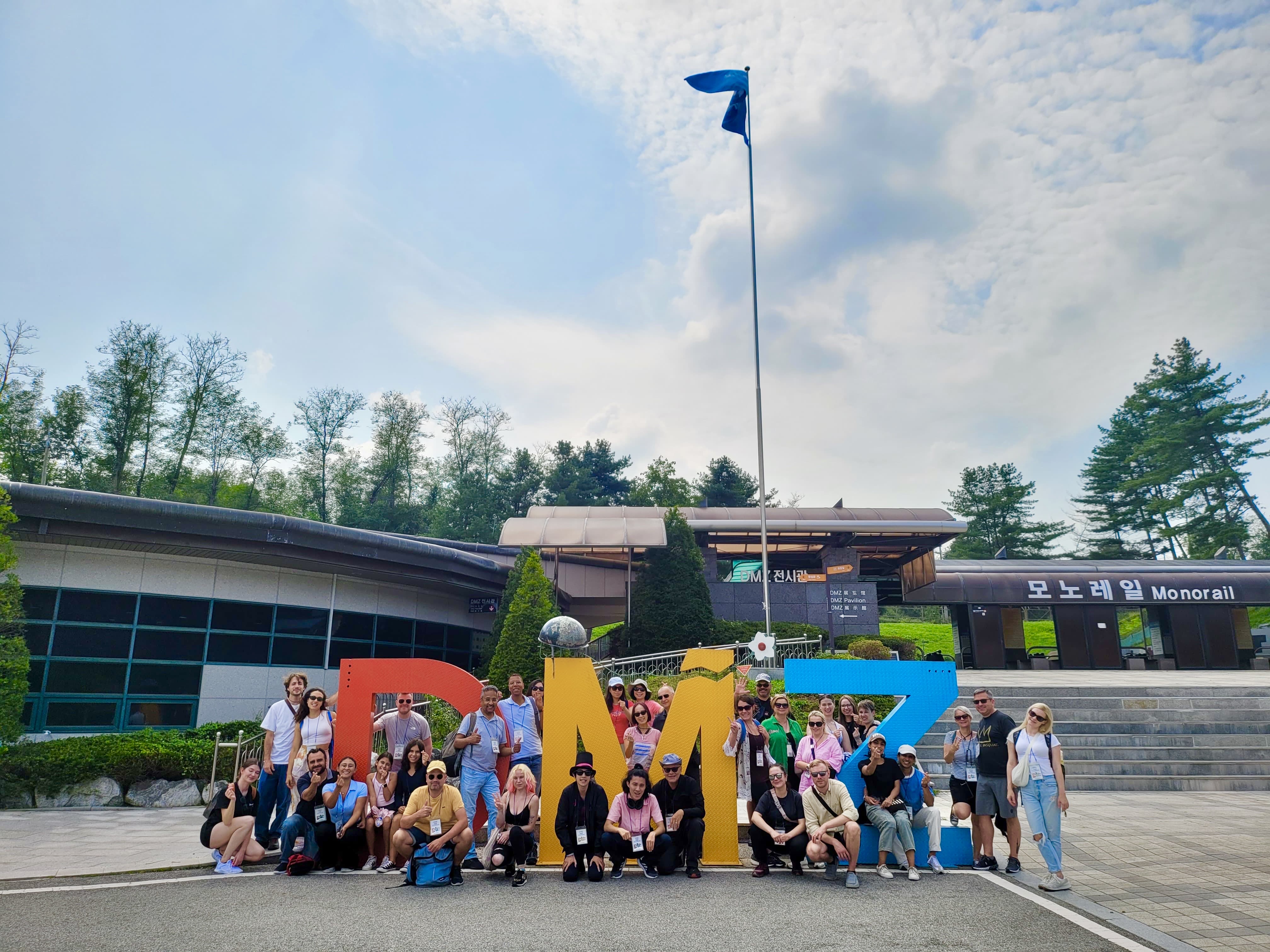
I chose the PLK tour to take me to the DMZ, although there are many tour options. This one did not include the JSA, which also wasn’t open during the time I was there. Though some tours do include the JSA, when it is open. The popular Dorasan Tower was also not available during this time, I believe having to do with the current sound wars between North and South Korea. But we visited a different tower with a telescope instead, from which I was able to take a photo of North Korea through a telescope (below). According to our tour guide, South Korea’s speakers are much louder than North Korea’s speakers, and South Korea is blasting sounds and news of the outside world out over the Han River. North Korea is projecting their own music to their people to cover up the sounds coming from the South. I heard the music, or more like noises, while standing up on an alternate observatory and peering into North Korea from just across the river. You can hear them for yourself below.
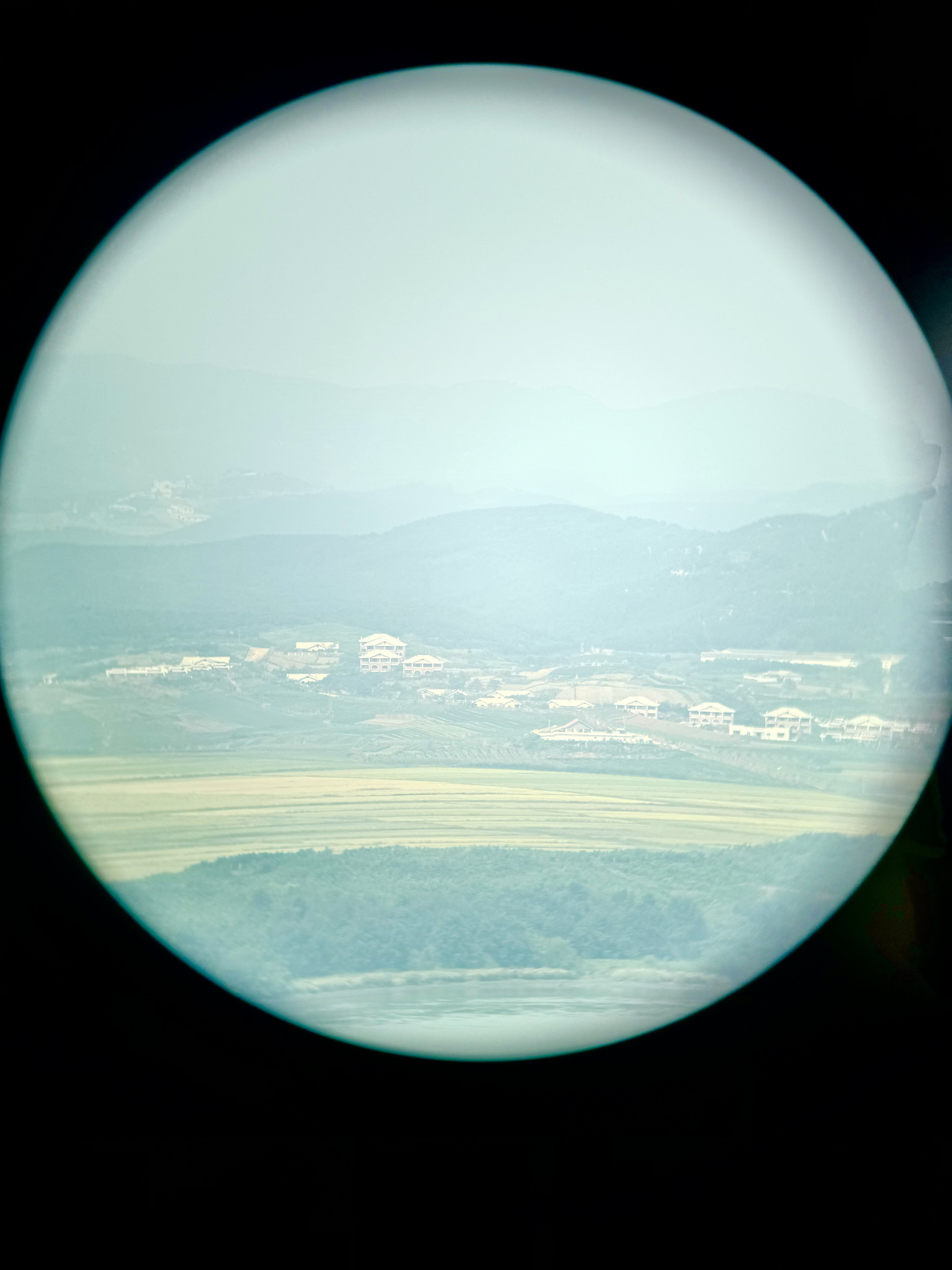
The North Korean “music” sent chills down my back. We learned that just two years ago bodies of young children from North Korea had washed up on the shores of South Korea over the Han River (the river in the video above). Though whether the children were killed for trying to escape, during the escape, or before, seemed unknown.
Our tour guide told us that only 25 tour buses are allowed into the DMZ (demilitarized zone) between the two Koreas each day. So every morning tour buses rush along the 45 minute drive to the border to go in and secure their time slot for the day with the guards. That day, our time slot allowed us to go in after lunch. When it was our time, after touring other nearby areas, we proceeded through a border check point where two very young Korean military men came aboard our bus and checked our passports to match with the birthdays and list he had been provided at registration that morning. The DMZ portion of the tour included the 3rd Tunnel of Aggression, which we hiked deep down inside. The 1-mile hike down isn’t for the faint of heart, either. What goes steeply down, comes just as steeply back up! The tunnel is 6.5 feet tall at the highest part, and hardhats are provided. As we walked down I hear the continuous “tink” “tink” of hard hats hitting the metal or rock on the ceiling. Photos are not allowed in the tunnel, or of any South Korean military areas. For the tunnel, all belongings must be left in a locker and you go through a metal detector and security checkpoint before entering the tunnel. It was a harrowing experience, as was the entire DMZ visit. The weight of the war between the two Koreas can be felt in all of the areas, especially after the stories of, In Order to Live: A North Korean Girl’s Journey to Freedom, which I read on the flight over.
The third part of the tour is the Gamaksun Suspension Bridge, or “Gloucester Heroes Bridge” and is dedicated to the 1st Battalion Gloucester Regiment of the British Army who fought in the Korean War. It is a steep but short climb up to the bridge from the parking lot and while below it is just a highway, it offers sweeping views of some gorgeous mountainside.
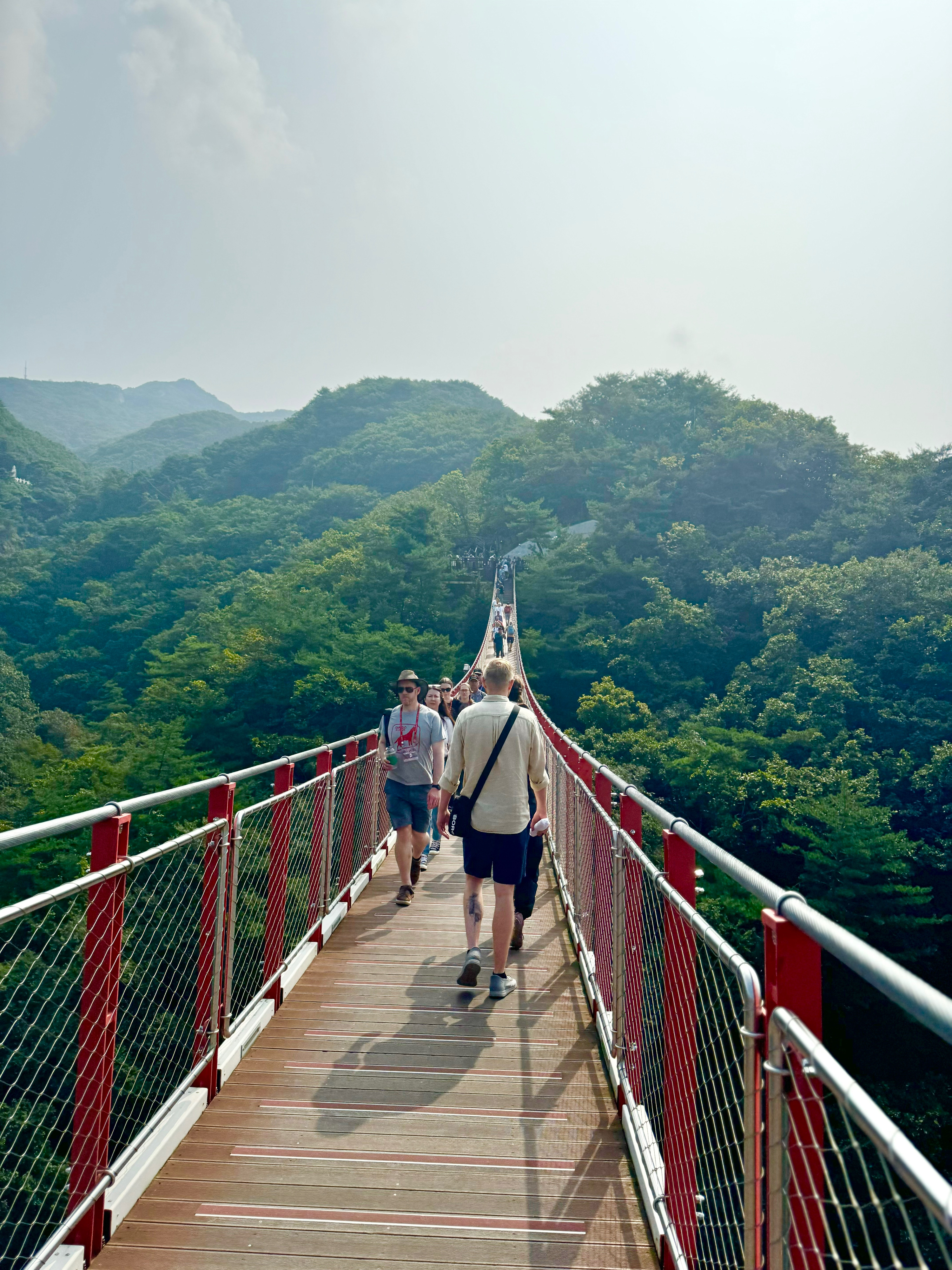

The tour, as I had hoped, proved to be a great start to my week in Korea, providing enough useful history, along with completing my book about Korea on the flight over, that I felt knowledgable enough to embark on my recruitment journey. I quickly picked up the most useful phrase for the week – 감사합니다 (gam-sam-ni-da), or “thank you” in Korean and said it every chance I got. It had a nice sing-song way about it. Saying it to the Uber drivers (also popular in Korea) seemed to be a welcome nicety, as they smiled and sang it back. Unlike Uber drivers in the States, these ones were always older men, who usually drove really fast! While they were a little grumpy, most people I met in Korea were very friendly and polite. I learned quickly that items passed between people should also be handed with two hands, whether giving or receiving. It was a habit that returned home with me.

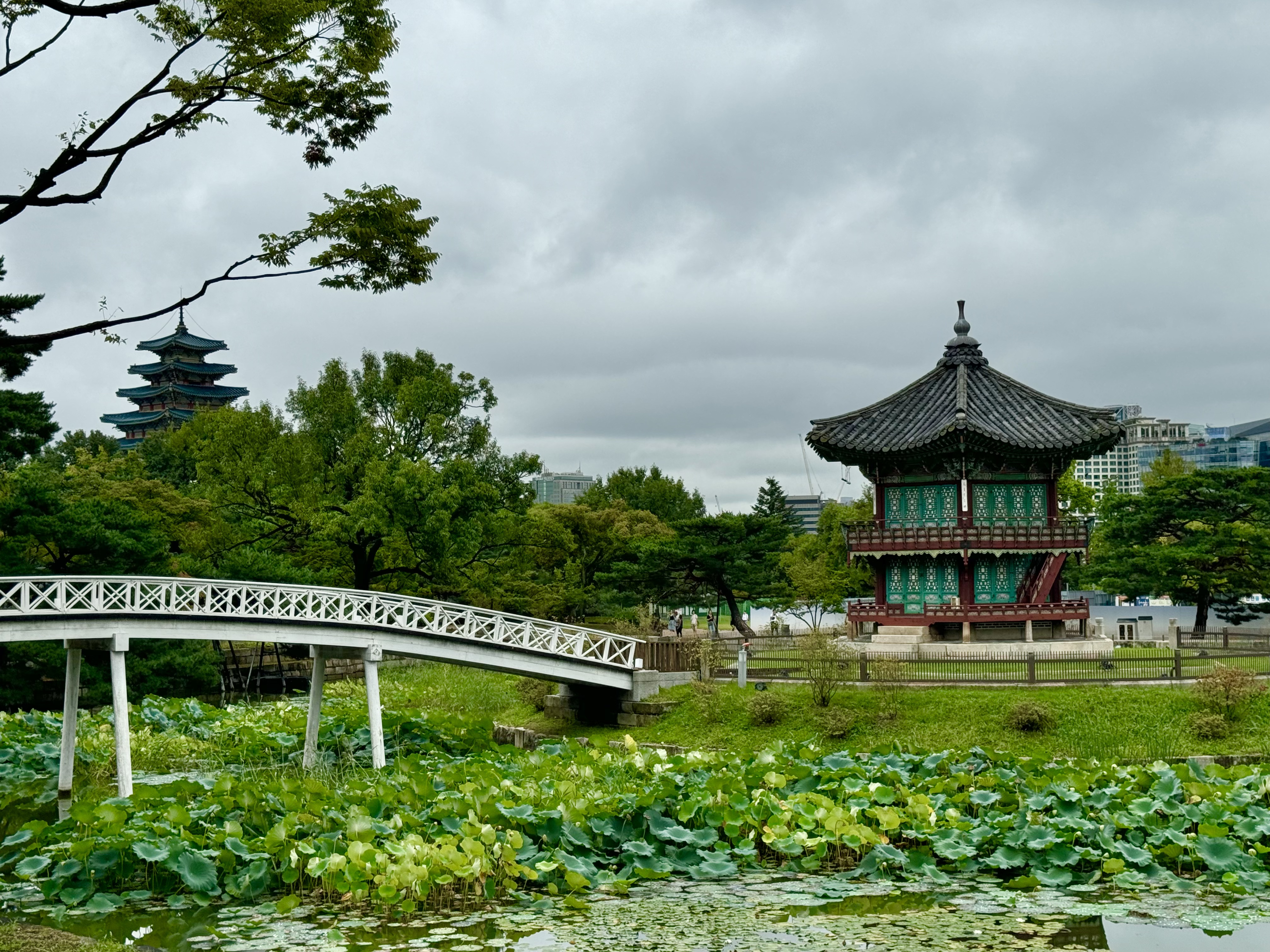
I afforded myself one final sight seeing event on my last day in Seoul, before my flight out. I packed up my belongings on Thursday after a full week of high school tours, talking with students from 8th up until 12th grade about attending university in the United States. I checked out, left my luggage with the concierge, and hopped into an Uber to make my way to the Gyeongbokgung Palace. It was September but still unusually warm and humid and I didn’t want to be completely drenched before my flight. The entry fee was quite cheap and I was able to tour the palace (2 miles around!) and gardens long before many of the groups arrived. I made my way over towards the Gwanghwamun Gate, in front of which, the changing of the guard ceremony occurred.

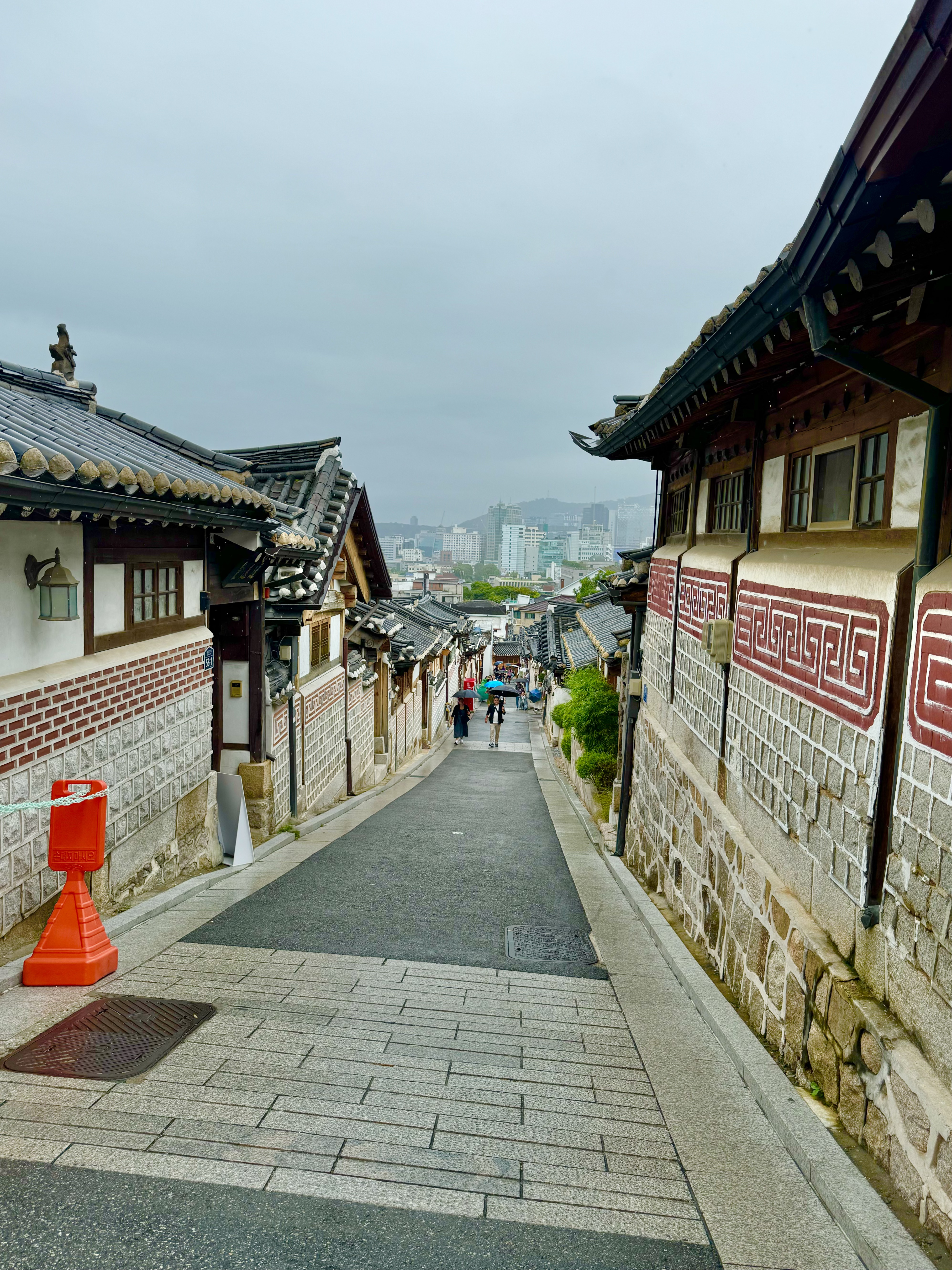
If I had had more time, I would have absolutely rented Hanbok for the day and strolled the palace grounds in the traditional clothing. Most people who visited the palace, for every corner of the globe, did participate in the tradition. The original palace and buildings were built in 1395! Between wars, fires, and occupation, much of the palace has been destroyed and rebuilt to the sight it is today. The next stop was a quick trip to the Bukchon Hanok Village, just outside the palace grounds, where traditional Korean architecture still stands strong. Of course the traditional houses are now quite expensive. Tourists walk the residential streets, and Mercedes and Tesla juxtapose starkly in the driveways against the ancient homes where they live.
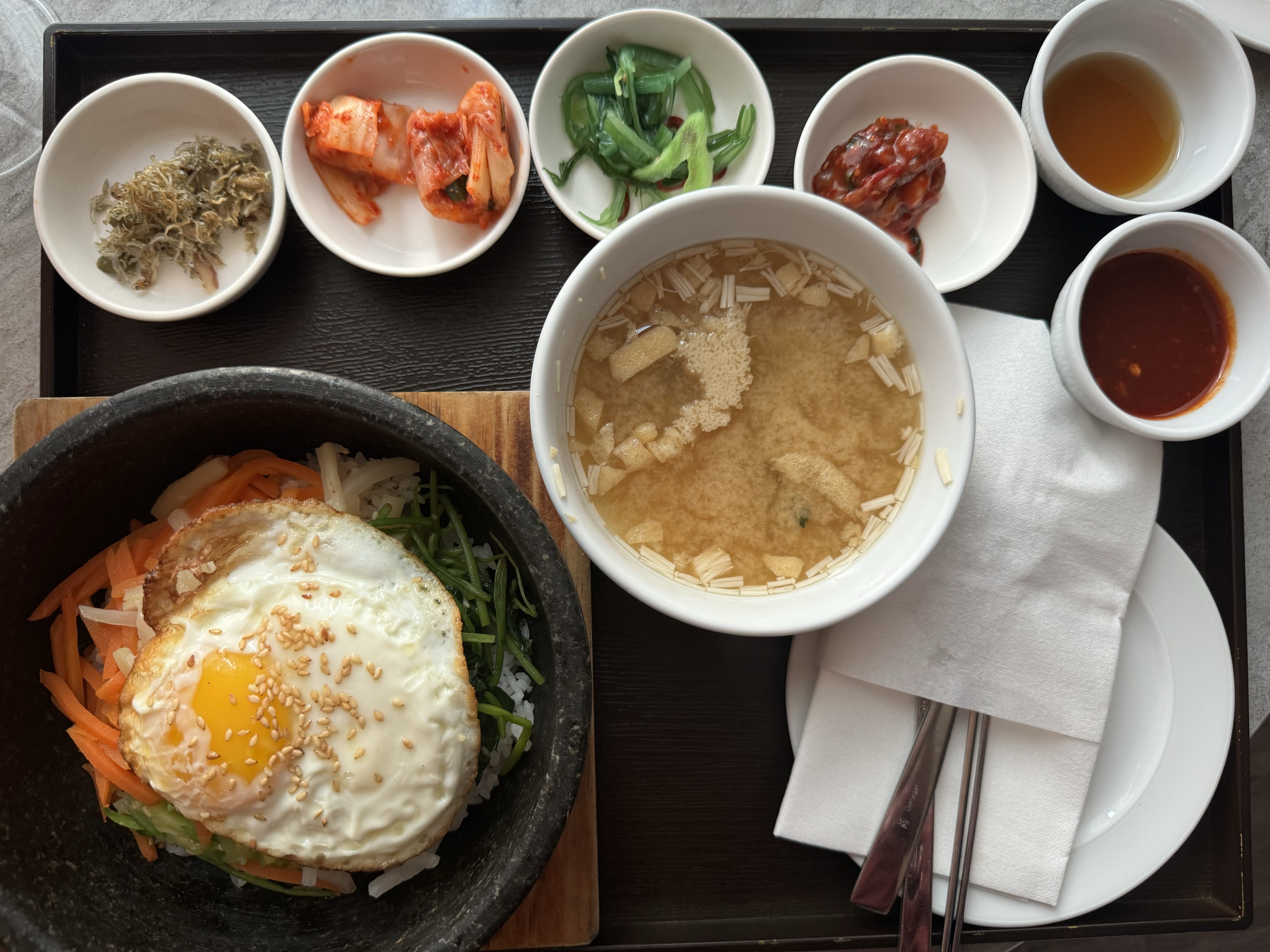
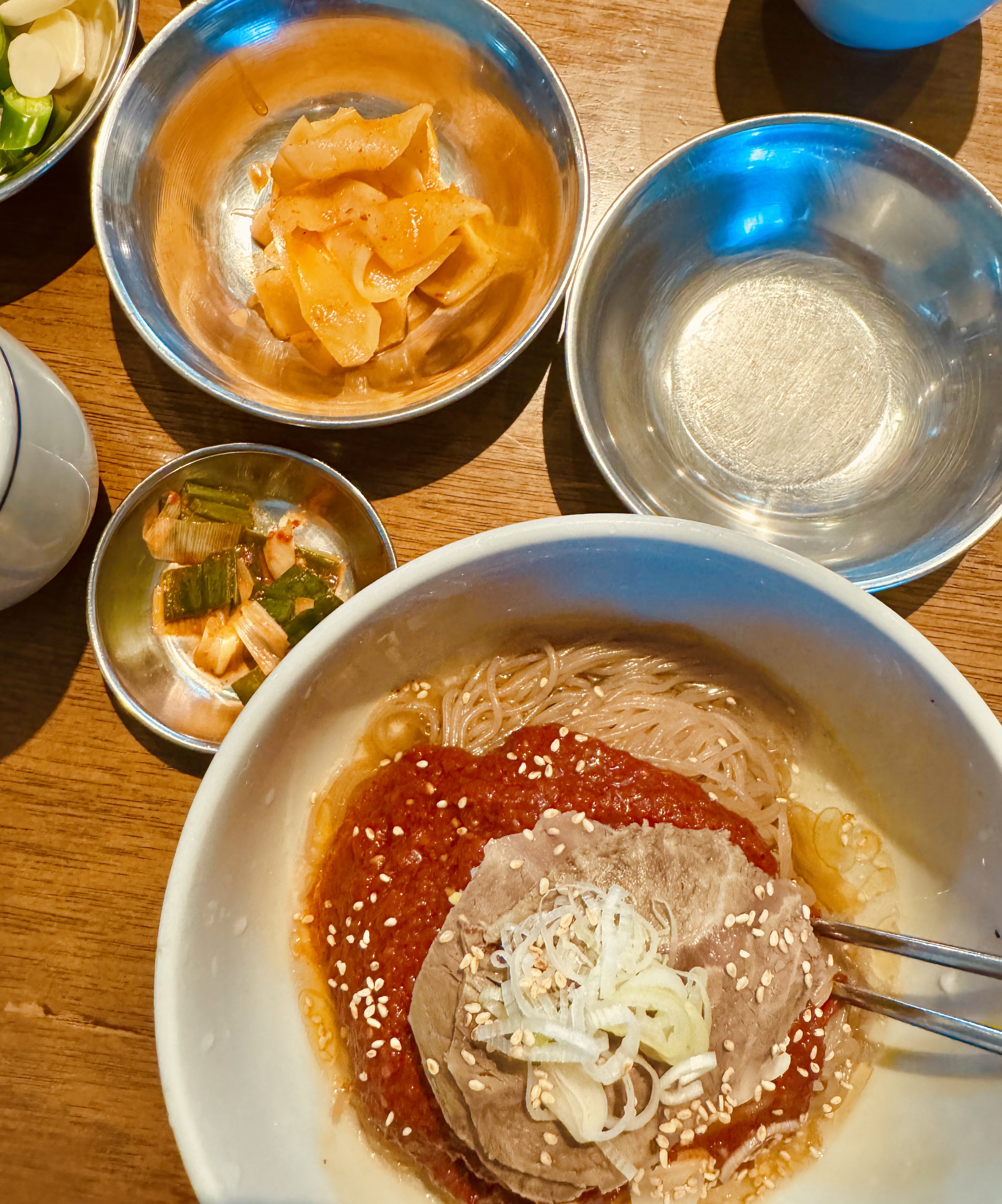
Now no trip to Seoul would be complete without mention of the fantastic food options. I had three noteworthy and amazing meals in Seoul. The first, was room service from the hotel; a traditional bibimbap with vegetables.
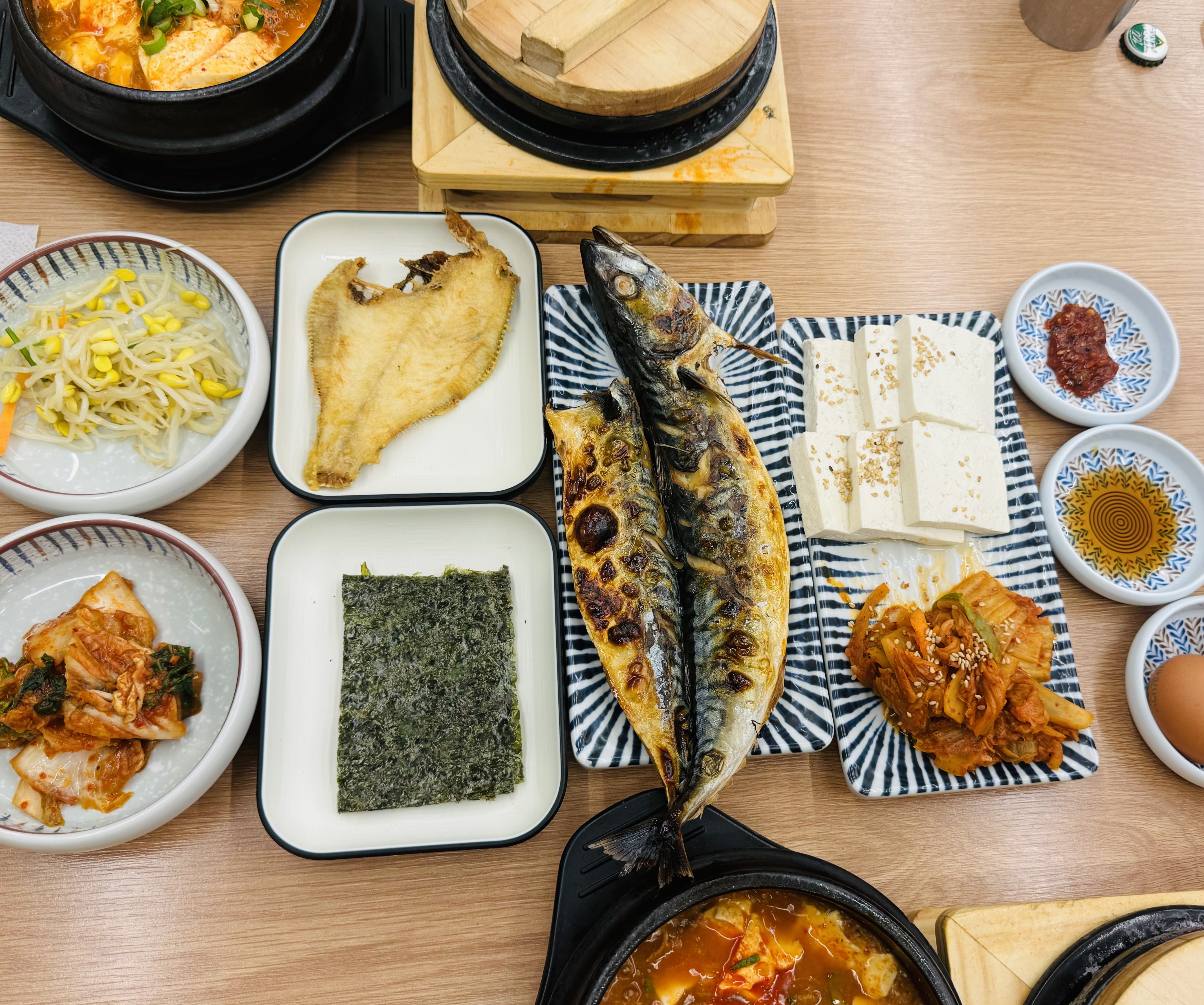
The second, a dinner with my friend Yehjin on a second floor, hole-in-the wall somewhere in Myeongdung. I couldn’t even tell you the name.
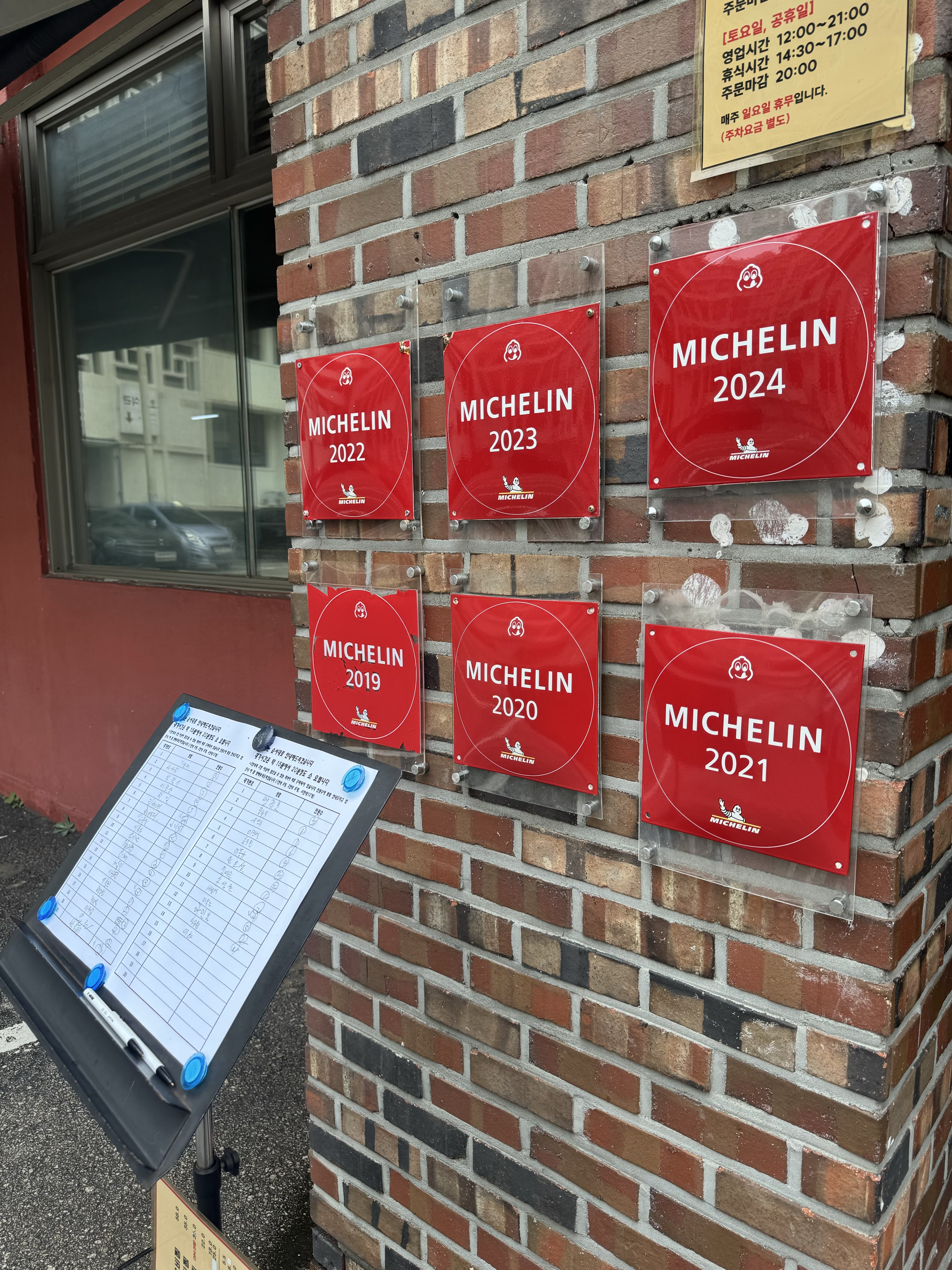
And the third, my very first Michelin Star restaurant – Gwanghwamun Gukbap, with another friend, whom I hadn’t seen in over ten years.
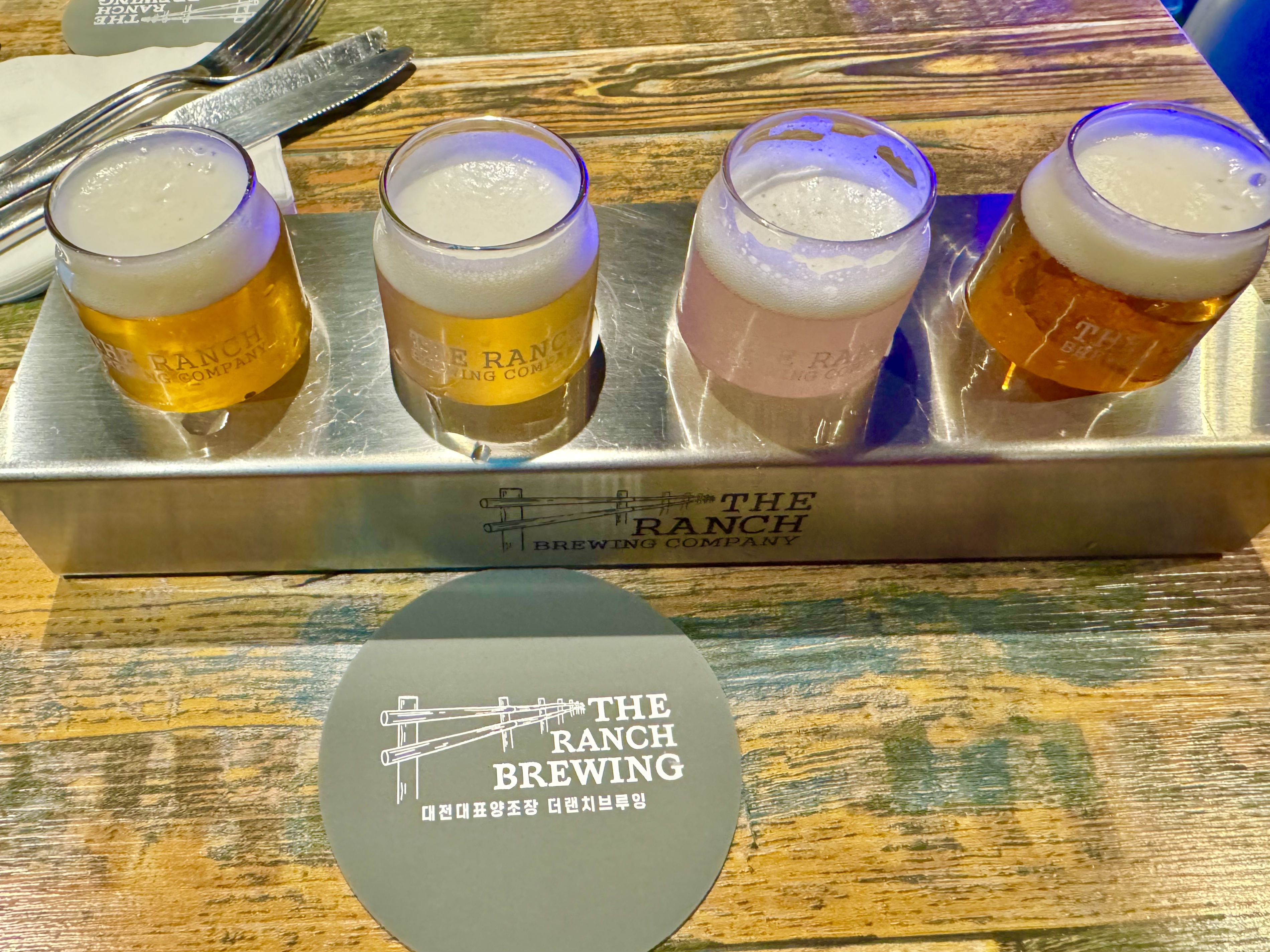
Also in my food quests throughout the week, I sought out a local brewery, as is my usual custom when traveling. I was near one Myeongdung called The Ranch Brewing and decided to give it ago – perhaps primarily based upon its Alice in Wonderland quirky style and entry. In fact, it took me a few minutes to figure out HOW to enter. Their front door, just off a side street, is essentially a funky fridge door, that looks like a beer vending machine.
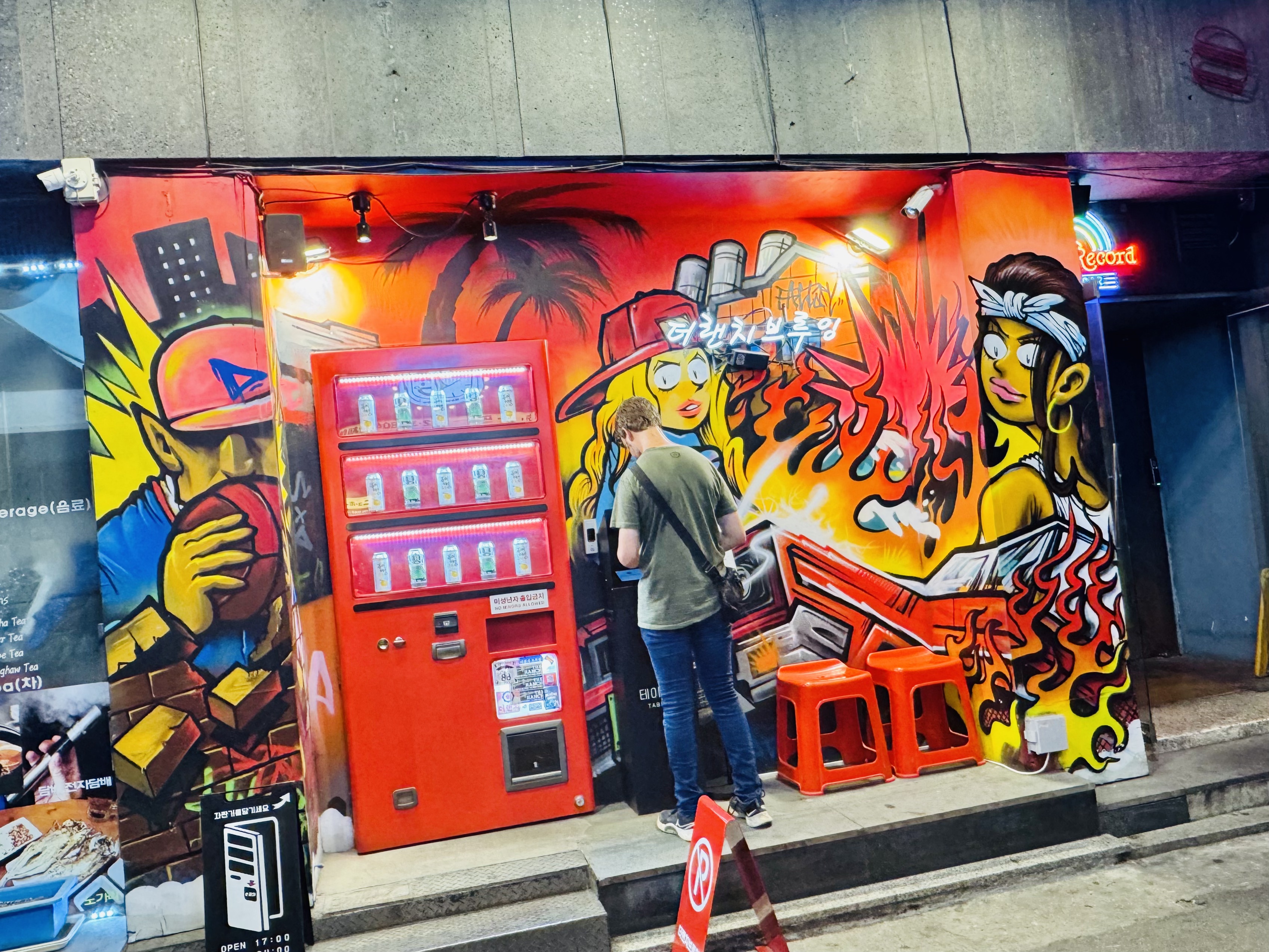
It was so quirky I couldn’t actually figure out how to open the door at first, or find the entrance. At one point I entered a door to the right, heading to two wrong places in a stairwell, a pub and a hamburger joint. Friendly Koreans helped me both times, the first saying, “Oh no, that one is down stairs.” So I went all the way down stairs, and they said, “Oh no, that one is upstairs!” It was on the ground floor, and not in the stairwell at all. Finally, somebody came out of the red vending machine door, so I used that opportunity to go in, only to be sent back out to sign up on a kiosk for the waiting line. The place was tiny inside, and packed. So as I filled out my info in the kiosk to be put on the waitlist, I saw another person fidget with the door some before going in, just to be sent back outside, looking confused.
“Trying to get on the waitlist?” I asked. He nodded, “I guess so!” I explained that I was having trouble entering a phone number for the waitlist, because I wasn’t sure how to enter it with the area code/ country code, and it wasn’t letting me submit without entering something before the area code. Anyway, I pushed enough buttons (putting 01 before the 970) that it was satisfied, but I was pretty sure there was no way they were going to be able to text me when a table opened up.
The gentleman pressed in his Korean phone number (he later told me he’d bought a Korean sim card upon arrival, so he had a Korean number), and then sat down beside me in the only two tiny stools available for waiting. We must have sat there for 20 minutes waiting. I would later come to find out that he was from Manchester. He was also planning on dining alone inside. When they finally came out to offer me a table for one, she said it had two seats, and the rest of the place was full, and I had offered to let him sit at my table since we both getting anxious after 20 minutes of waiting. So I had dinner with a complete stranger named Harlen, from Manchester. We had a properly pleasant British chat over a beer and some pub grub. The beer was impressively good!
Lastly, one of the unexpected highlights of the trip was finding my first cat cafe while wandering the streets of Myeongdong. I came across a person in a cat costume, holding up a sign for a cat cafe. I couldn’t resist. Following the signs, I made my way down a long hallway and up to the 3rd floor behind a sealed door, right next to Happy Massage.
“Ring doorbell and someone will be out to greet you.”
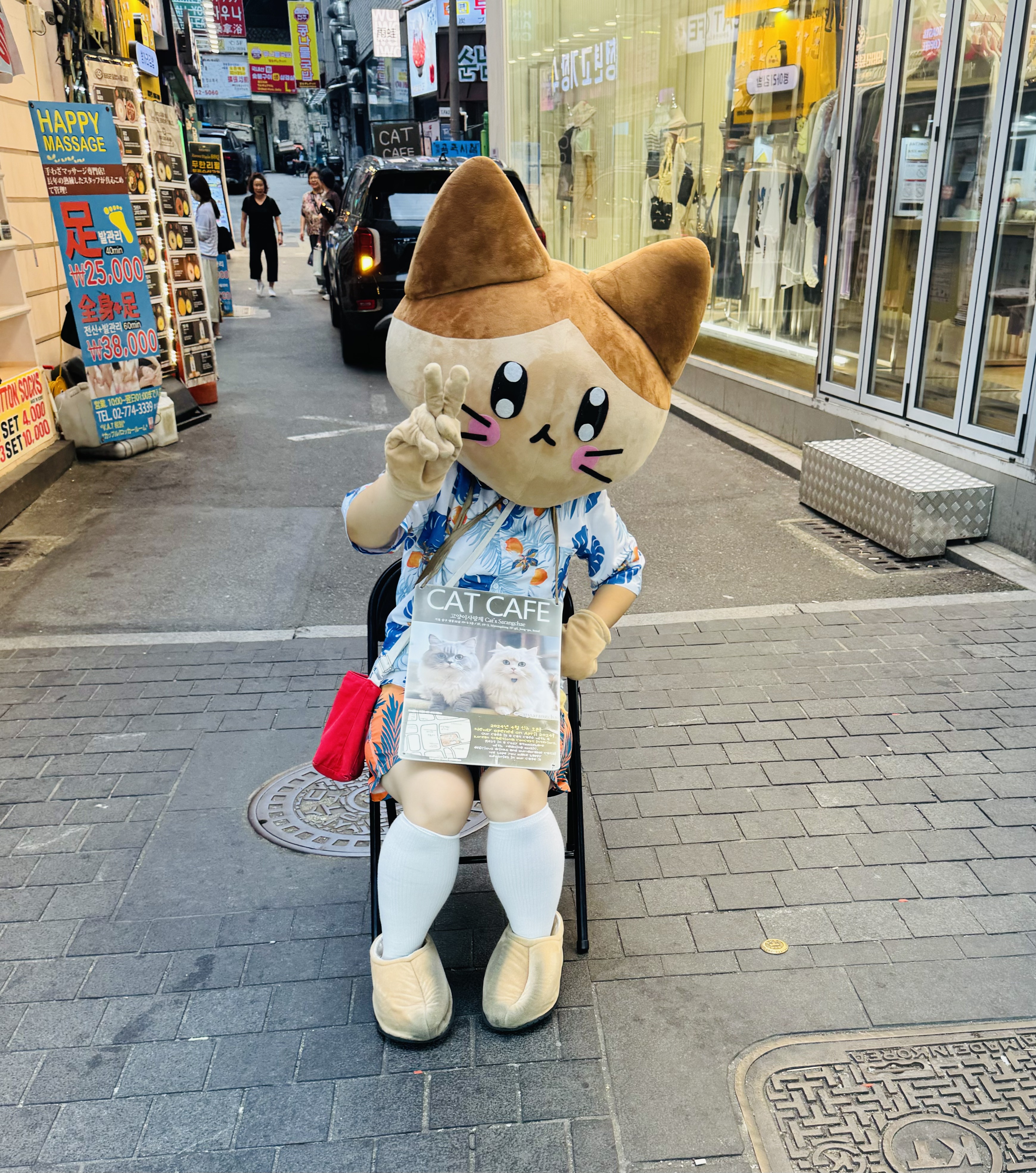
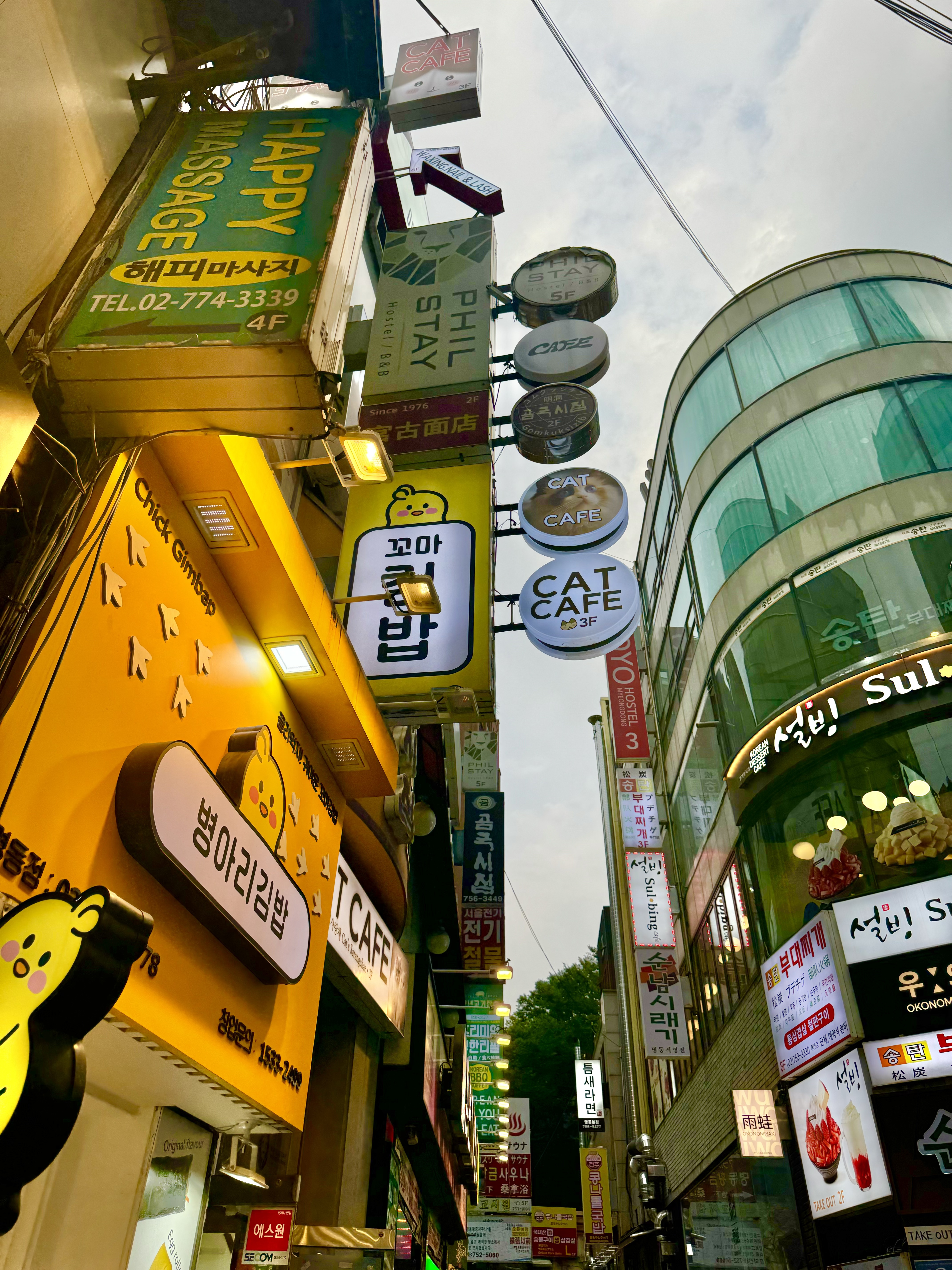
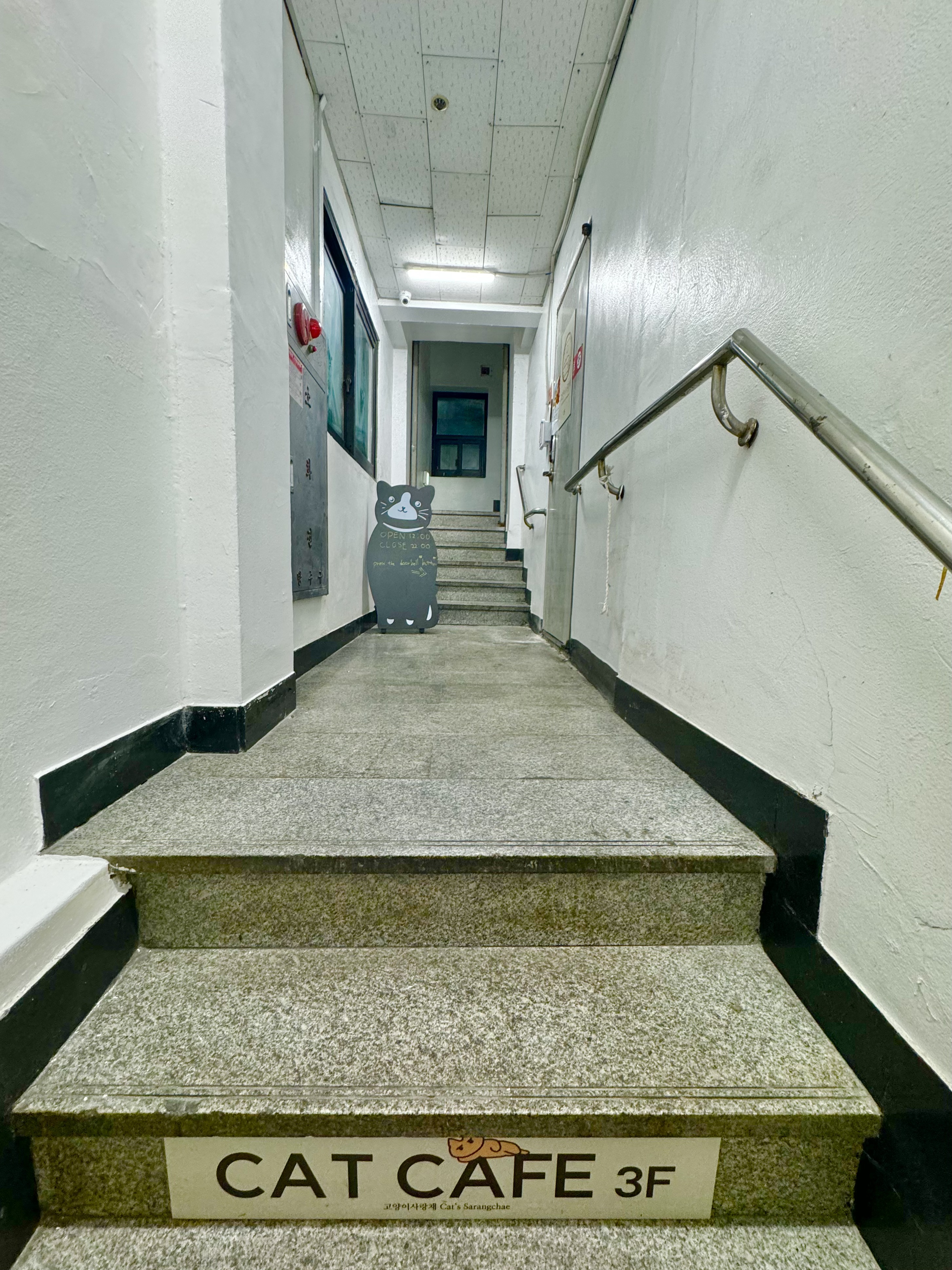
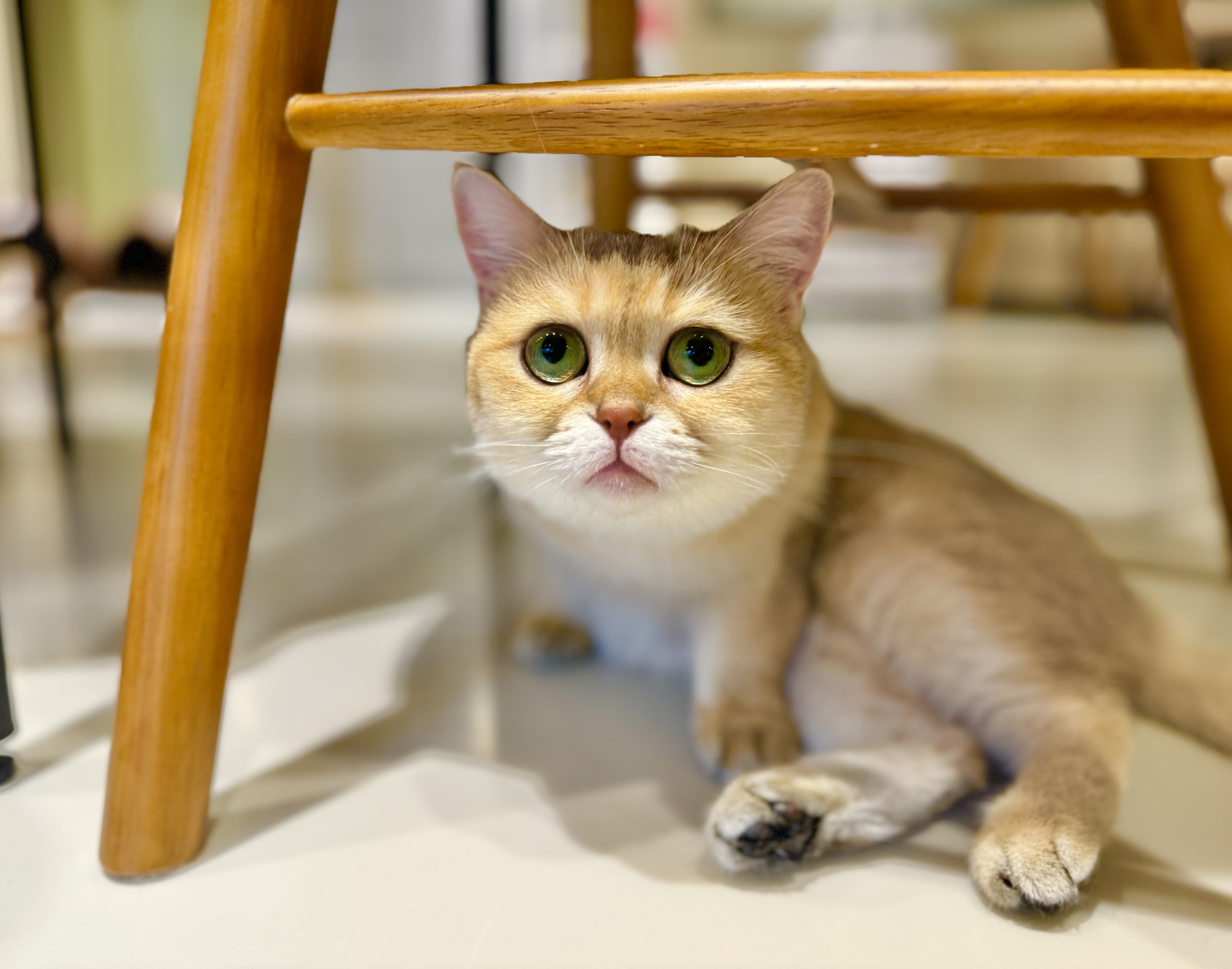
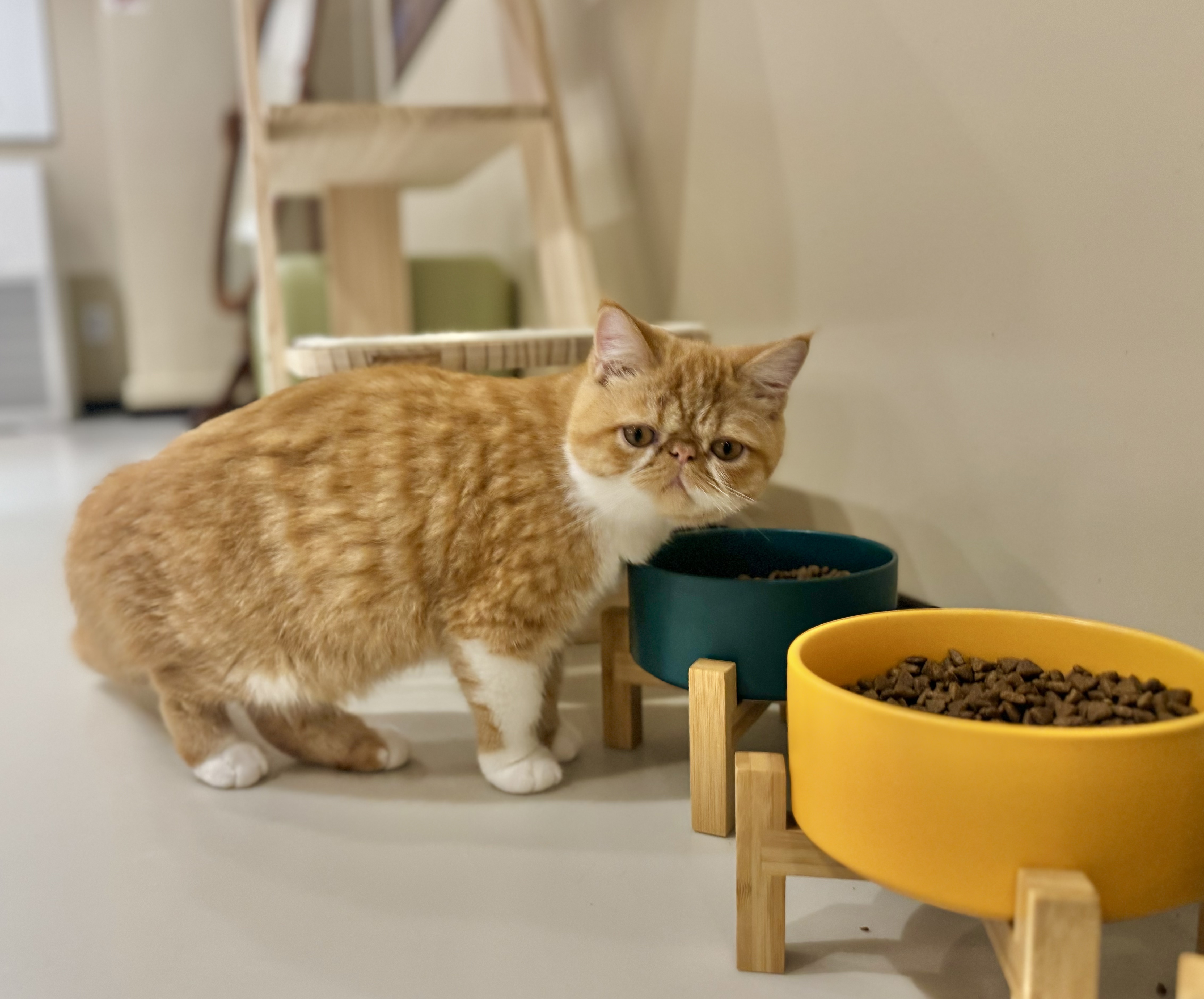
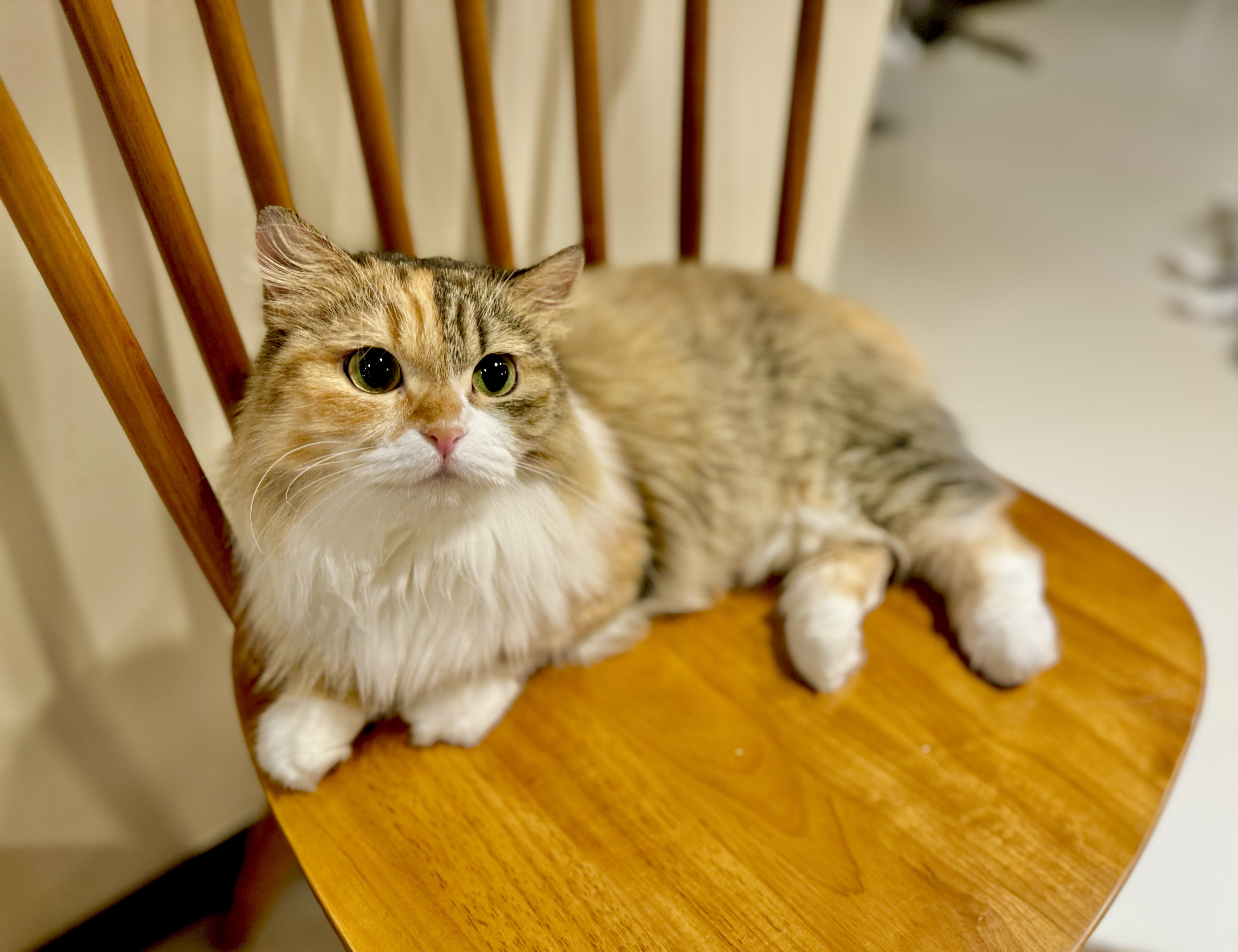
And it was then that I was finally lured into a cat cafe. After ringing the doorbell and a short wait, I was greeted by a young woman who signaled for me to take off my shoes and replace them with the provided slippers in a cubby. We went through a gate in our slippers, and I ordered my latte. It was a good latte too! I perused the small room to visit all the cats. There were many! I waited (as per cat rules) to see which ones wanted to visit me. One fluffy cat quickly sauntered over to give me a sniff, and roll over for a tummy rub. The others seemed much unamused by the frequent visitors, clearly not short on attention, and were content to continue napping. I sat cross legged on a floor mat by the window and allowed casual passing cats to give me a sniff, some pausing for a scratch. I had never seen cats that looked like these ones before. Some had extremely short legs, like a dachshund version of a cat. Some were very old, some were very saucy, and some had very sad faces.
I spent a lot of time in the Myeongdong area, mainly due to its close proximity to my hotel, but also because it had everything I was looking for: street food, street performers, Olive Young, shopping, and great culture. In fact, there were lots of talented performers along the streets, including a gentleman belting out Billy Jean (TikTok) with the utmost passion and rhythm. It’s a performance I am not likely to forget.
As a final note, the Insadong Culture Street is worth a quick visit. Fun fact, unlike my European travels where baristas are required to speak English at Starbucks, I learned that Korean Starbucks are not regulated like many other Starbucks branches, the staff did not speak English, and the drinks are quite different, and they were out of most of the region specific drinks I had hoped to try.
 Poesie Sans, Souci
Awesome writeup! Filled in more info that we didn’t get to. My only question is, what is Olive Young? When you were saying your area had everything you were looking for.
Good question! I also had no idea what it was until arrived there. It is like the ULTA beauty of Korea, and full of all the Korean skin and beauty products you could ever want, and quite affordable! I naively didn’t realize what a trend the Korean fashion industry was. Now I know!