
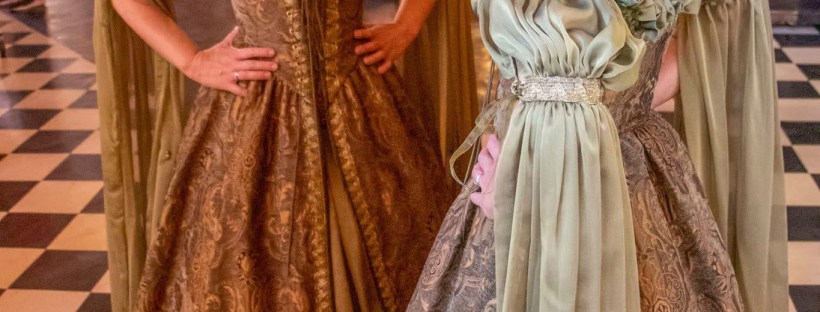
In 2010 I simultaneously visited my first renaissance festival in the United States, and found the dress I wanted to get married in.
I visited a renaissance festival for the first time in Germany, in 2005. I was fresh out of high school, and it was my first time out of North America. I spoke very little German outside of what Dany, the exchange student my family hosted my senior year, and I had practiced throughout the previous year for fun. I picked up basic phrases. A Renaissance festival happened to be going on that first weekend of my arrival and seemed like the ideal activity. My suitcase was lost on my flight over and I borrowed clothing from Dany’s high school friends and family for the event. Whatever I ended up borrowing seemed much more appropriate than any clothing I could have brought from the U.S. Everything felt so authentic there, not like the costume store options I might have found back home. Handmade costumes, authentically made in the traditional style were everywhere. Nestled in a field beside a German forest, the smells wafting out of the tents, the campfires and roast pig quickly took my imagination back hundreds of years.
Although I was just 17, I was of legal drinking age in Germany. Dany’s brother Thorsten conjured up a small glass of “Met“, better known as mead. I hadn’t heard of it before. I liked it so much I bought a small bottle to go, and also decided to use my hard earned FFA money to purchase two drinking horns, one for me, one for my brother. They seemed like the ideal gift for him from my travels, and likely quite different from anything he had ever experienced. I still gift him mead, but it’s usually homemade now.
I didn’t know it then, but German and medieval history would end up shaping a great portion of my life. It was just a small spark to the flame that began that year. I shifted my initial university interest from equine science, to international studies and German, and took all of the medieval history courses offered at CSU, along with all of the German specific medieval courses. I minored in European history with a major in German language, literature and culture, but didn’t make it to another medieval event until a Christmas market in Bamberg, Germany probably over five years later. Instead of taking place in the forest, this one nestled along the Regnitz river, to the backdrop of the medieval drum on the cobblestone streets of the Altstadt in Bamberg. I remember the sun never seemed to come out that winter. The evening was frigid, so we took our Glüweihn and walked the medieval streets, one of the few medieval cities left untouched by WWII. By this time I could speak German, and my heart was beginning to dance to the beat of the medieval drum. If you have ever attended a Renaissance festival, you know the sound.
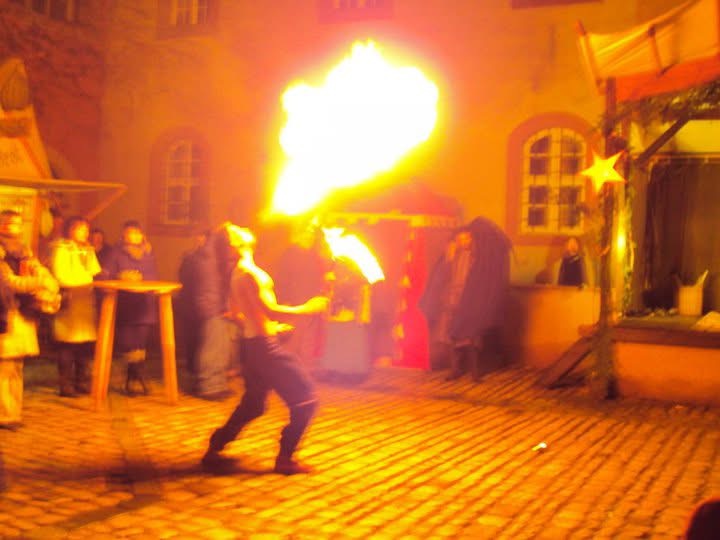
In 2010, while working on my master’s, a fellow Couch Surfer from the U.S. and I decided to ride out to the Colorado Springs Renaissance festival. This one had its own medieval buildings set up at the fairgrounds for the fair each year. I remember that year I won the knight’s favor at the jousting tournament, we visited the elephant offering rides, though I didn’t have the heart to ride her, and somehow ended up in the dress tent. The dress shop, Noblesse Oblige was selling the most authentically hand-sewn Renaissance dresses I had ever seen.
“Please do not try on the dresses unless you plan to buy one”.
I had no means of buying a $950 dress that day, and we were also two hours from home on a motorcycle ride, so there would have been nowhere to put it. But I was immediately drawn to an olive green dress, none of the others were really even in question. I am not particularly provoked by green in general, but something about this one spoke to me. Two women led me back to a dressing room and instructed me to take all clothing off down to my underwear, no bra needed. As soon as the layers of the dress started going on, I realized why.
Layer 1. The chemise goes on. This piece is thin and soft and provides a layer of protection between the skin and the sometimes scratchy components of the top layers. It also provides a layer of ruffle over your bosom that peeps over the top of the bodice, and covers your arms, if desired.
Layer 2. Next comes the petticoat. The is the skirt layer that goes over the hips, under the petticoat, and functions like a skirt, covering the bottom-most layer. Made to be worn with an open gown.
Layer 3. Last is the bodice. This is filled in at the front with a stomacher, which is a hard piece that goes over the stomach, made with whale bone, which your laces tie over. These two pieces allow you to pack yourself as tightly into the dress as you like.
It took both women to stuff me into the thing. Breasts are pressed tightly inside the bodice, and fluffed up over the top. The bodice is so tight that the bosom really does stay well in place. Through daily wear of these dresses, women’s bodies effectively mold into the hourglass shape the dress fits them into, and stay that way. I had never seen my own body in such a way. I could nearly wrap my own two hands around the tiniest part of my waist, which was now hard from the whalebone boning. I learned later after some research that this style was likely from around the late Renaissance, the 1700’s.
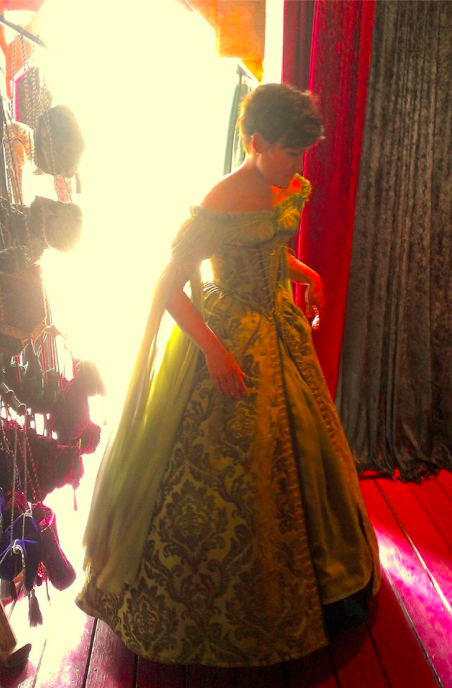
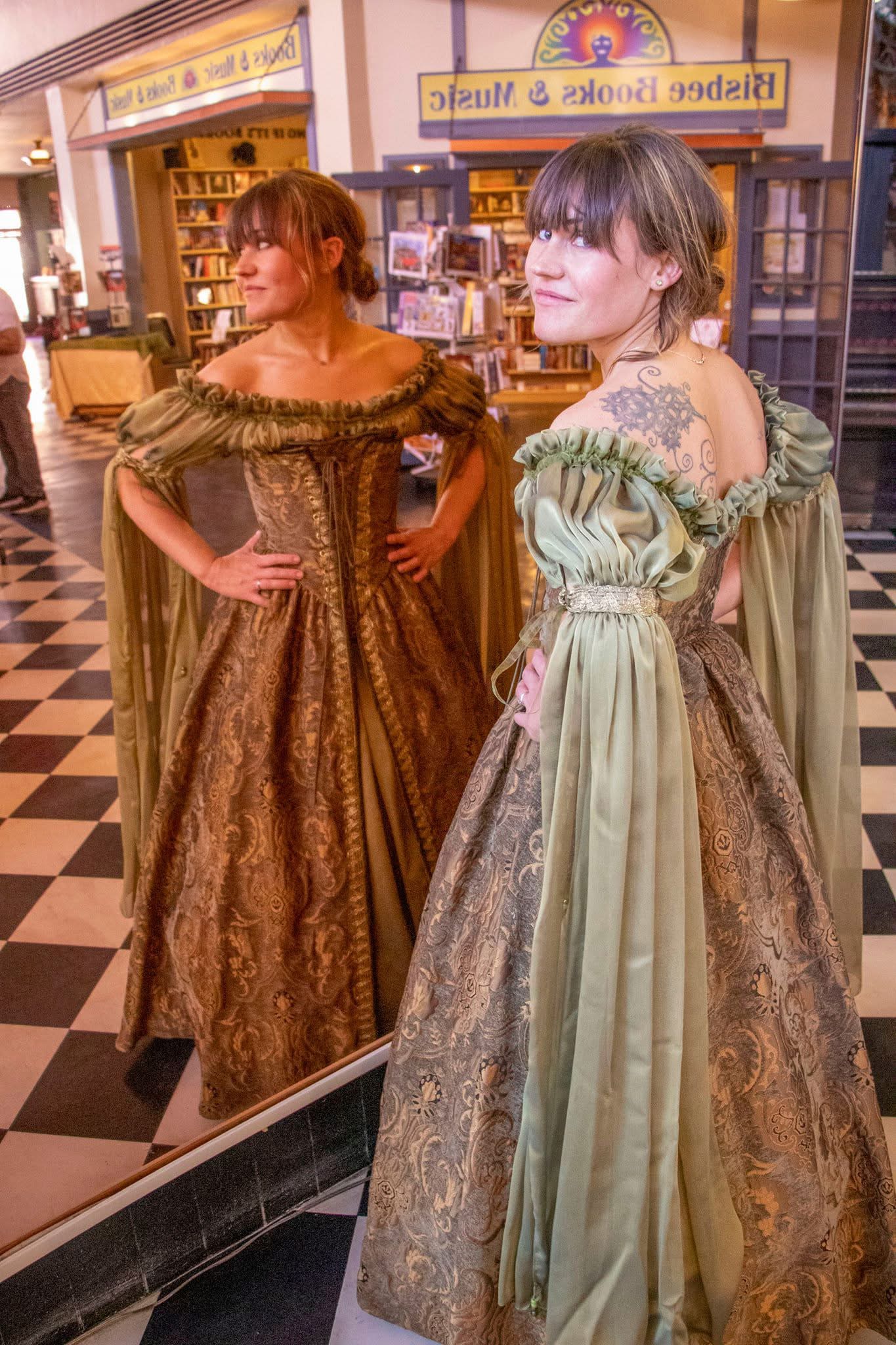
Apparently my Couchsurfing friend, Rhett, snuck a photo of me in the dress, as I looked at it in the mirror.
“No photos allowed”
Despite the “No photos allowed” signs posted amongst the dresses, it was perhaps just that photo that allowed me to track the dress down 11 years later.
“If I ever do get married someday, this is the dress that I want to wear.”
I said it out loud. It seemed like a strange immediate response to have had about a renaissance dress. I had never been particularly into weddings, nor had I ever had a particular interest in dresses, but the combination of my love for the medieval and renaissance, my experiences abroad, and the way I felt hugged tightly by that green dress, gave me a feeling I hadn’t felt since.
I kept the business card they gave me at the dress shop. “I’ll be back!” I said. Over the years I tried to keep track of Noblesse Oblige and was surprised to later find that it was located in Sedona, Arizona. What luck! I moved back to my home state of Arizona after graduation in 2013, and Sedona was and is, my favorite area of Arizona.
I met Brent in 2014, just about 4 years after trying on that dress, and he proposed on Christmas Eve in 2019. We were engaged for two years. My mind never let go of the green dress. When Brent proposed, we were standing on the big Route 66 sign at the train station in Flagstaff, which on that day was a makeshift ice skating rink. We were about an hour and a half from Sedona. During one of our weekend trips to Sedona prior to Brent proposing, I had tried to find the location mentioned on Google of Noblesse Oblige, it seemed as if it had a storefront in the Tlaquepaque Square, a popular shopping area. I walked the rows of storefronts and never found it. I called, but nobody answered.
In 2021, the weekend of May 22, deep in the thralls of Covid-19, Brent and I decided to elope the following weekend. We had gotten our marriage license the previous August, but had no set wedding plans. Yes, the decision on a date to finally tie the knot and the act of it all happened within a week’s time. I promptly began searching for a last-minute hotel stay in Bisbee, Arizona. It was tourist season there, and I apparently found the last room available (in the city!) at an old schoolhouse-converted-bed and breakfast, in the Principle’s Suite. The last room. Continuing with the serendipity of it all, both of Brent’s parents were school teachers, so the room and bed and breakfast were fitting.
“We have to go get your dress!”
Brent remembered my quest for this dress, and remembered the story of the dress that changed my life so profoundly I knew I had to get married in it, before ever having plans of a wedding. Early in the week we drove down to Sedona again, to investigate another address linked to Noblesse Oblige online. I couldn’t figure out if it was a storefront, business address or otherwise, so we decided to see what we found. Twisting back around the suburbs of Sedona, we came up to a small home. There was a prominent and elegantly engraved sign post out front that said, “Noblesse Oblige”. I was mortified at the thought of going to someone’s home, unannounced, but somehow the sign post, and with Brent’s “we’ve driven all this way, we can’t give up now!” encouragement, convinced me to knock. A woman with brilliantly white hair and a body the shape of an hourglass opened the door. She had been sewing in the window. There were Renaissance dresses and outfits all around.
Within a minute I spewed out the quickest version of my story that I could, and her eyebrows tipped upwards, her eyes grew wide at my tale. “Well let’s go see if I have it!” She said.
“Go around to that door over there, and look through those, and I’ll be out in a minute.”
I motioned for Brent, who had been sitting in the car, to come over. Baffled at our luck, we searched together through the rows of dresses hanging in a warm storage room. Of course each dress isn’t always available in every color or style. Each one is unique. I found out that Noblesse Oblige, owned by Leslie, sells at two fairs a year, the big Maryland one, and the Colorado Springs one, with occasional sales online. She spends the rest of the year sewing and preparing. There are dresses of all sizes in various styles but what was perhaps even more remarkable, was that she had the green dress, the only olive green dress, identical to the 2010 dress, in my size, and my size only.
Since the dress would be for a wedding, she encouraged me to grab a couple of other ones just for good measure, so I tried on a white and a light blue dress, too.
Once the three dresses were selected, Leslie graciously took me into her home, made us all some tea, and helped me into them. I learned that Leslie’s mother was from Scotland and had passed her dressmaking skills down to her at a young age. She had been making dresses her entire life. Her hands suffered from arthritis and her body permanently matched the shape of the dresses she had been wearing for so long. Alas, the olive green dress left no question as to which dress was the right one, it was much more royal and elegant than the others, too.
The magical and unlikely adventure that still all felt as if we had stepped into a floating figment of my imagination, seemed as if it wouldn’t be there if I ever returned. In fact, after we were married, I made a card composed of photos from us in Bisbee, and sent it to the address in Sedona. I wanted to send a photo, as I promised I would. It was returned, marked an invalid address.
The home was fashioned in bright colors and antique pieces, accented in a way that felt like an Alice in Wonderland tea party. Her doorhandles were the Doorknobs from the tale. The couches were upholstered a brilliant and luxurious purple swirled fabric, and the tables featured swirled claw feet. There were tapestries on the walls, antique lamps and tea sets, and even an Alice in Wonderland cat. Though her name wasn’t Dinah. I couldn’t have created a better dream home myself.
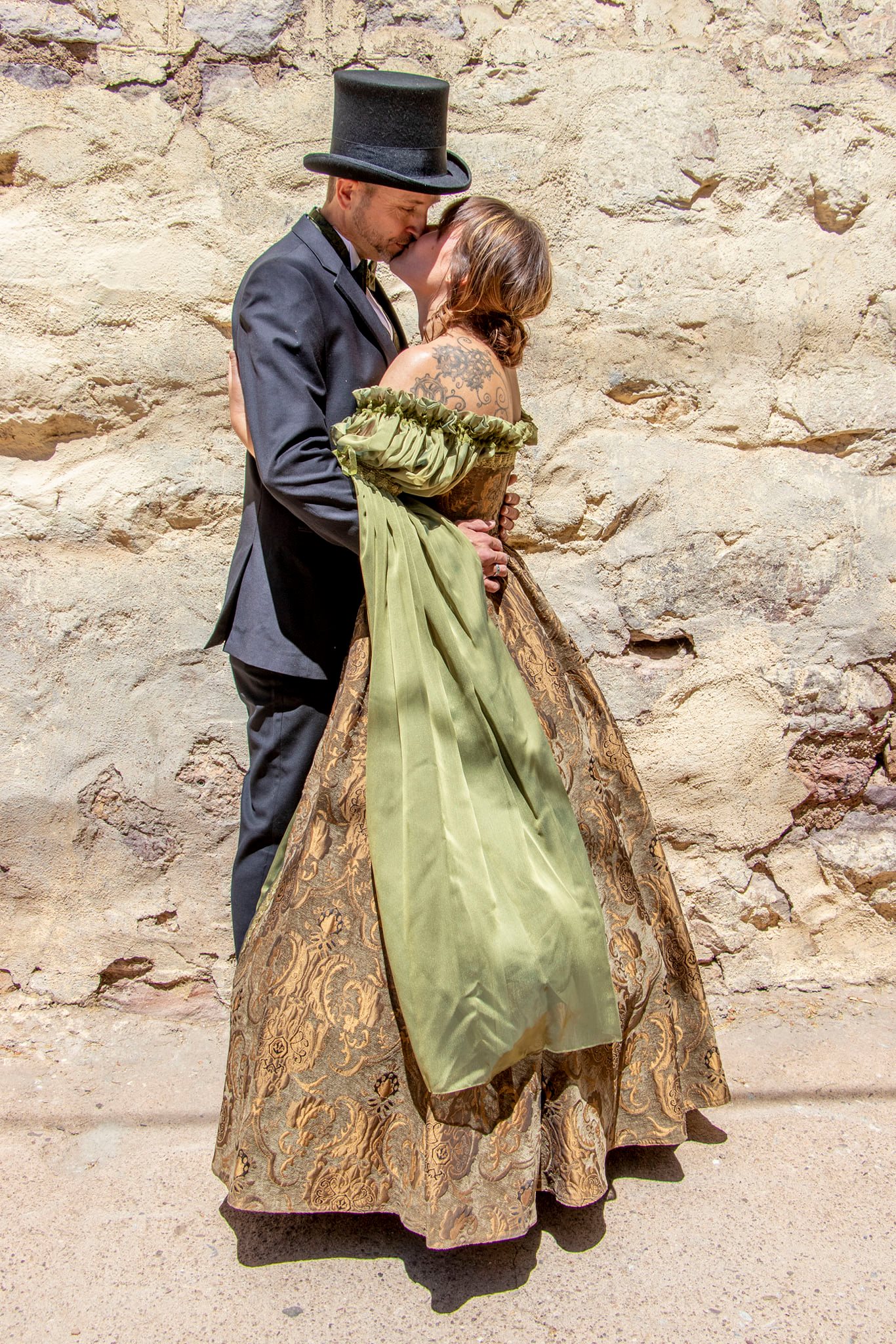
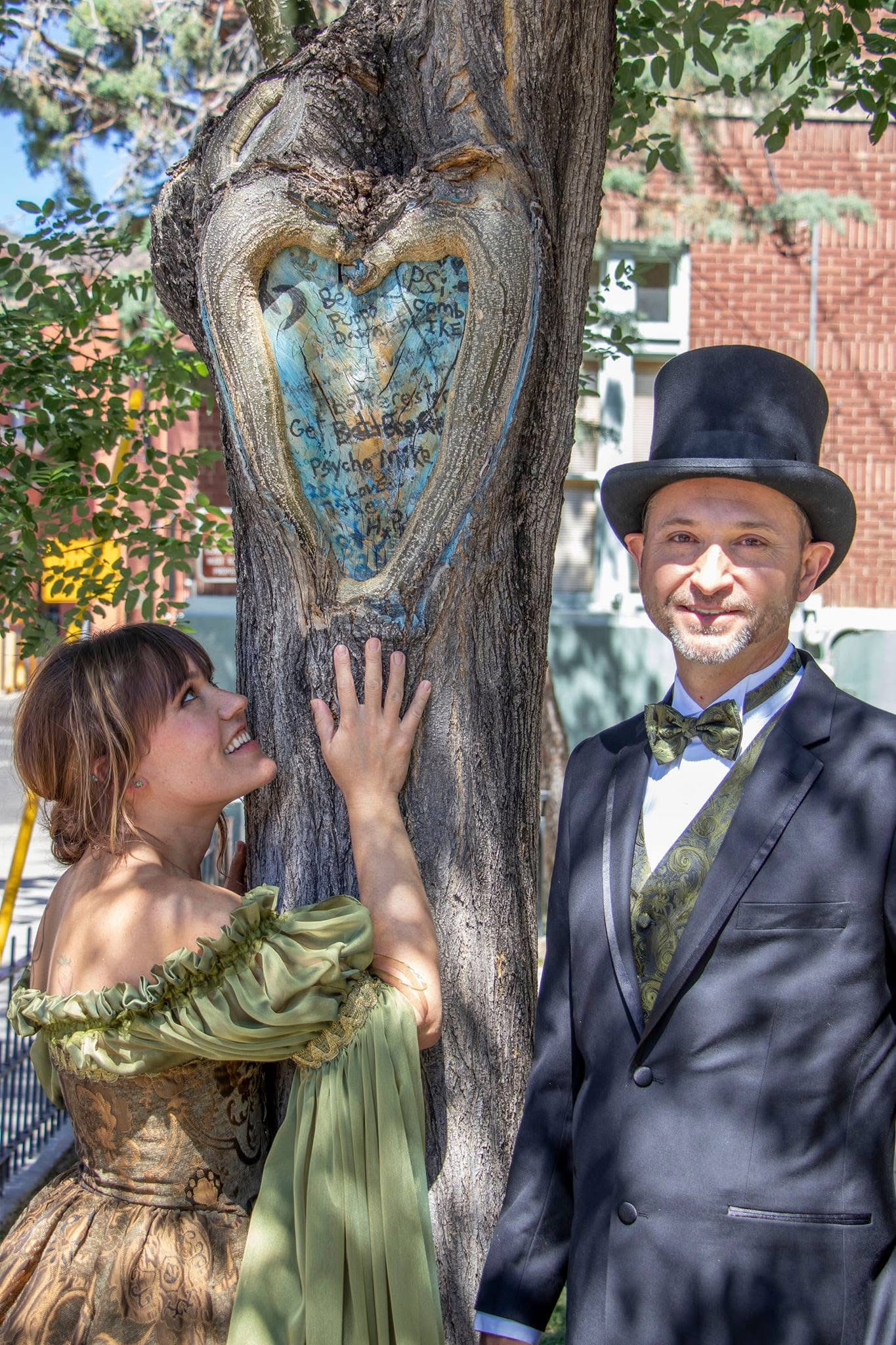
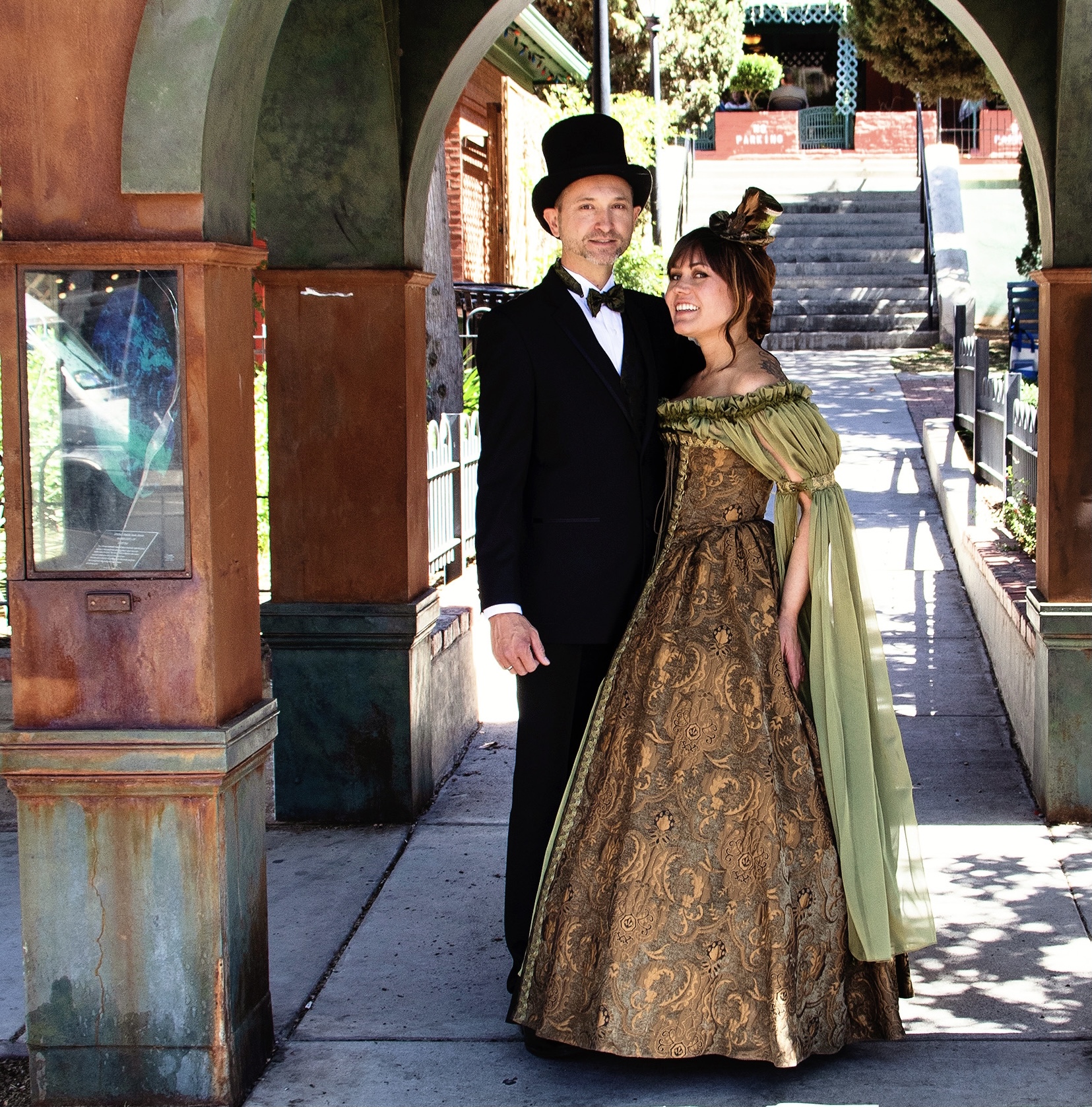
I’m still not really sure the dressmaker’s house is actually there, but I am left with a very tangible dress, that I can wear annually, at renaissance festivals around the country, sometimes Halloween, and any chance I get, and a wonderful husband. A man as magical as I could have hoped he’d be.
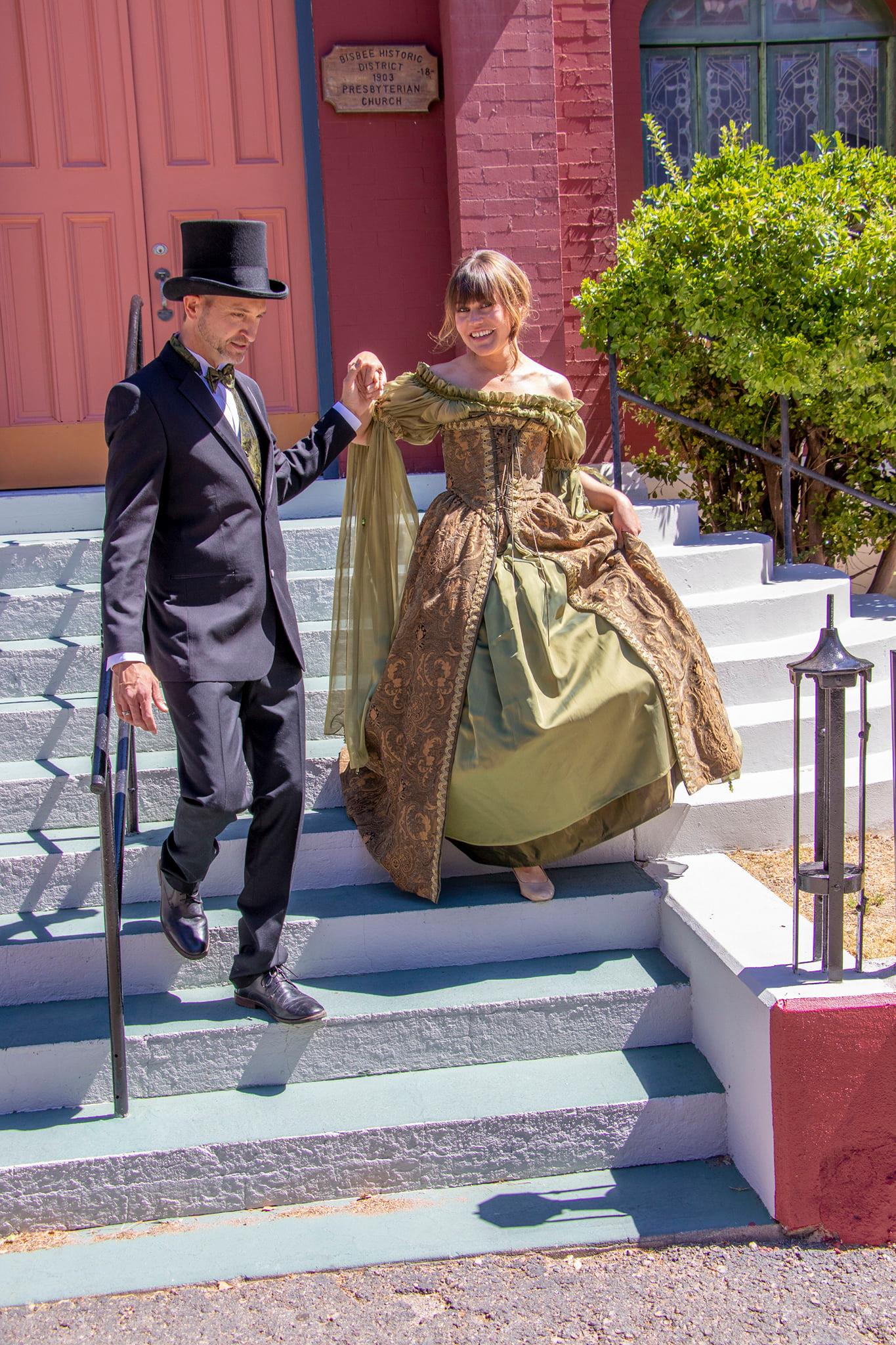

 Poesie Sans, Souci
Such a good story! And beautiful pics.