
I thumbed through my little packet of boarding ticket info, back in the days when your ticket came printed in the mail in a little sleeve. And then it was my chance to just read, uninterrupted, for 2 to 3 hours. By 13 especially, I devoured books. This was before movies were on all the flights. I don’t remember ever being particularly afraid of flying alone or unsure about all the parts I did on my own. Airports weren’t intimidating. Flying wasn’t some big adventure. It was simply how I got from one of my parents to the other.
For most of my childhood, airports were a normal part of life, the in between place that connected two very different worlds. The rolling suitcase wheels on tile, the plastic wings pin they’d clip to my shirt so all the flight attendants knew I was the unaccompanied minor on the plane, the particular blue of the airline seats. It seemed like I also always got to sit right up at the front of the plane. I spent a lot of it flying back and forth between Colorado with my dad and Arizona with my mom. I would fly as an unaccompanied minor and have a flight attendant walk me onto the plane, help me settle in, and find my seat.
My parent would walk me through the airport, we’d make our way to the gate, and wait with me until the flight attendant came to help me board the plane. I remember the long hug, warm wave and a smile as I looked back down the jet bridge, watching my parents watch their kid head off onto her own journey. I always remember how sweet the flight attendants were, helping me get buckled in and make sure I had everything I needed. But I remember feeling like I could recite the safety instructions at the beginning of the flight myself after years of hearing them.
Then came September 11, 2001. I didn’t necessarily understand everything that had changed that day, especially not right away, but I understood one very specific, immediate thing: my parents could no longer walk me to my gate. I was thirteen, just starting high school, and the next time I flew, for the holidays that year, they had to leave me at security. I don’t remember every detail of that period of time right after September 11th. I don’t remember every conversation about September 11. But I remember the airport. I remember my mom trying to explain to me what happened, that freshman year of high school, and saying I could stay home that day if I wanted to. I did.
Depending on the airport, there can be a lot of ground to cover between security and the gate. Suddenly, something I had always done with a little bit of adult help became something I had to navigate on my own. I had to get through security alone and make my way to the gate without my parent walking beside me.
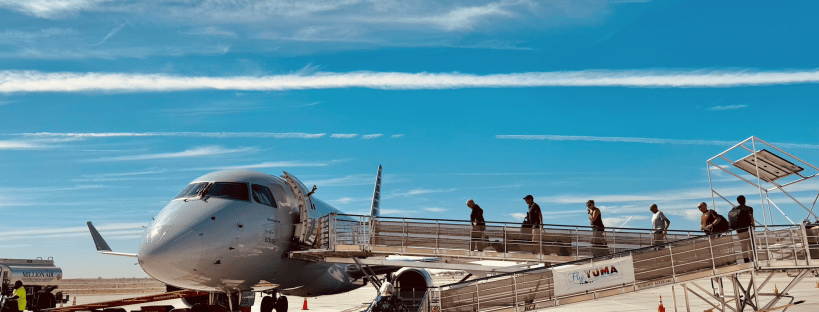
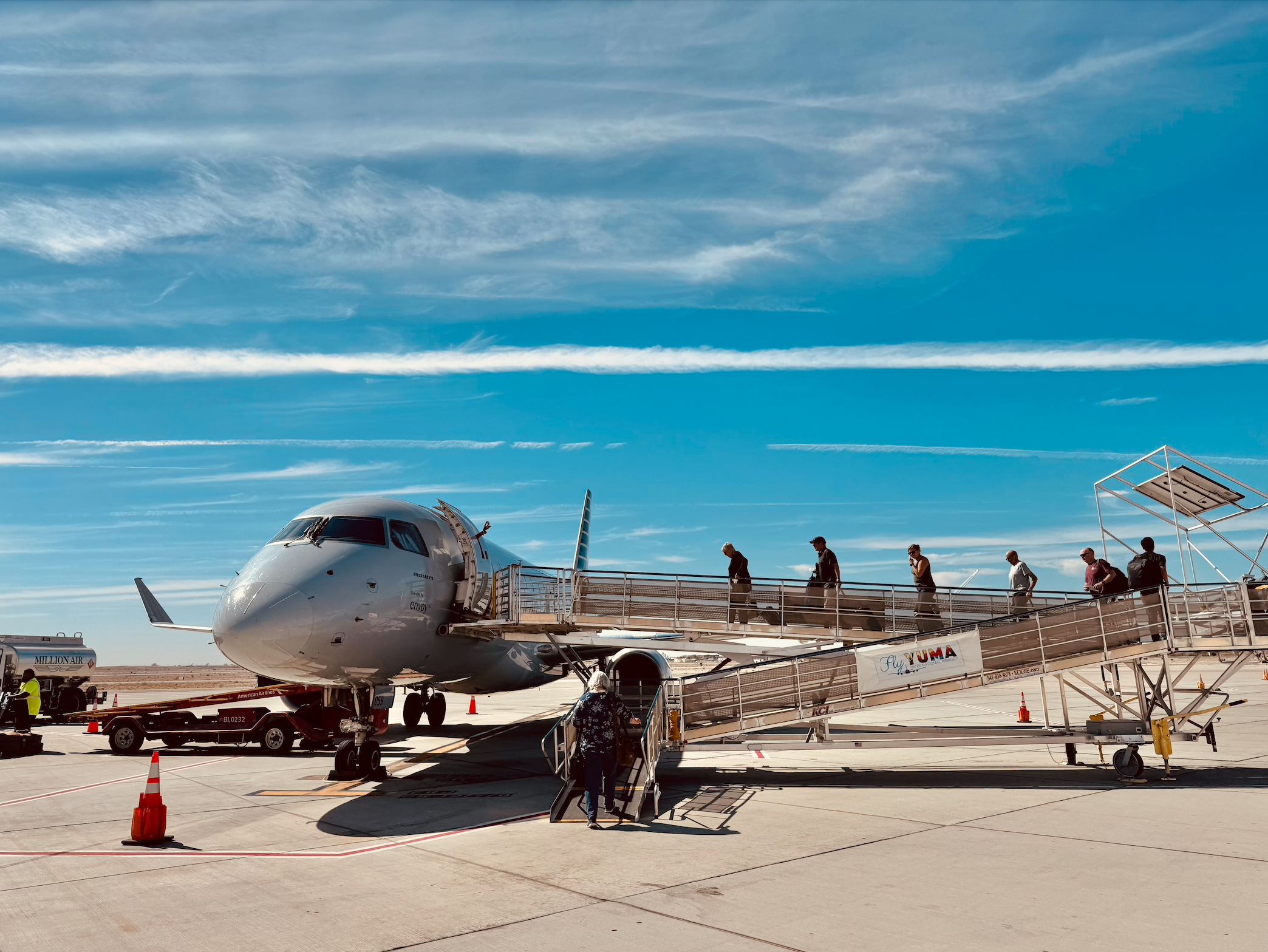
The first time would have likely been at the Phoenix Sky Harbor Airport, though we sometimes went out of the San Diego airport. There is a long way to walk between security and the gate. I took it in stride, book in hand. I turned back and waved at my Mom from the other side of security and marched my way like I had always done to my gate, staring longingly at the planes out the window and wondering where they were going.
It’s funny what sticks with you. After high school graduation, at 17, I took on my first long solo flight, to New York, and then on to Europe for the first time. I barely batted an eye at the long flight. By then, navigating airports and flying on my own felt pretty normal. I was reassured knowing that my exchange student from senior year, Dany, was on a flight a few hours behind me. Her flight had been purchased almost a year in advance, and I wasn’t able to get on the same flight. What I didn’t know when I boarded my plane was that Dany’s flight would be delayed by several days. So there I was, arriving in Germany, long before I spoke German, where I would be met by Dany’s parents, with a welcome sign (as we had welcomed Dany), people I had never met before, in a country I had never visited, with very little ability to communicate with them. But I wasn’t very concerned.
The wheels came down into a cloudy early morning over the red rooftops of Germany, patchwork and unfamiliar below the fog. Then the plane hit a terrifying patch of turbulence, dropping like a stone as I hit the end of my seat belt. Rattled, and headed toward people I had never met, that was how I arrived in Germany. But as I would come to find out, their English was much better than they thought it was, and they were waiting for me excitedly at the greeting area after baggage claim, smiling, with their sign held up for me.
I spent those first few days with Dany’s family, her siblings and friends, experiencing this strange and wonderful introduction to Germany while waiting for Dany to arrive. And then, several days later, she did. I got to be the one waiting at the airport to welcome HER home to her country after a year away, surrounded by her family. The irony wasn’t lost on me. The little girl who had once been walked to her gate by a flight attendant had become a teenager navigating airports on her own and now, somehow, I was the one standing in an international airport waiting to welcome someone else home. Just as I had welcomed her into the U.S. when she arrived for her exchange year, there I was to welcome her home again.
And now, 25 years later, I had a surprisingly strong internal reaction to hearing that some airports are once again allowing non-flying family members to accompany passengers through security and walk them to their gates. Solo-flying kids can have their parents walk them to the gate again.
My adult self looks at it and thinks, “That actually makes sense.” Of course it does. But somewhere in me is still that teenager who learned that the airport changed after September 11, and I never thought that walking someone to the gate would be a reality again. Somewhere in me is the kid standing at security while a parent has to say goodbye there instead of at the gate.
For adults, September 11 changed so many enormous things: the loss of thousands of lives and the grief of the families and communities left behind; our sense of safety and our understanding of what could happen on American soil; the way we traveled and moved through airports; and, ultimately, our foreign policy, our wars, and the course of the world that followed. For me, a child on the west coast, one tiny piece of that enormous change was much simpler.
I became a solo traveler. Navigating a labyrinth of an airport on my own, following the signs overhead like a language I’d already learned. Finding my gate. Keeping track of my things. Figuring out where I needed to be and when I needed to be there. My little wings pin, the book worn soft in my lap, boarding passes creased from being folded into a pocket too many times. And then, suddenly, the goodbye at security, a wave through the glass instead of a hug at the gate. I quickly became very good at airports. And to this day, I can count on one hand the number of times I have flown with someone. I have always traveled alone.
Maybe that shouldn’t be surprising. That teenager who learned to navigate airports on her own eventually grew into someone who spends a lot of her life traveling. I can’t help but wonder if that early independence helped shape the traveler I became. During college, I would hop on one plane and then another, sometimes with a one way ticket, heading off to new countries during long holidays. I found rides across Europe. I hitchhiked around the rim of Ireland. I figured things out as I went.
It all made sense to me. Airports made sense. Travel made sense. Making decisions, being somewhere I had never been before didn’t really feel scary. Not knowing the language didn’t mean I couldn’t figure out how to get where I needed to go. And now, for work, I am part of that unique breed within the higher education world known as a recruiter.
We’re the people who can find ourselves plopped into an airport somewhere around the globe, find our way wherever we need to go, sometimes without speaking the local language, and confidently maneuver a solo dinner and an evening of exploring in a city where we essentially know nobody. I don’t think twice about eating a nice dinner alone in a big city, although if I’m lucky I can find a fellow recruiter to join me. I didn’t even apply for the recruiting role; it plopped into my lap out of necessity, and I had the skills ready to go to make it happen. My passport was ready, and I had zero hesitation at the offer.
It was second nature to me almost as a teenager. And 25 years later, I find myself wondering whether that small change in my childhood was the beginning of it all. I would never suggest that something as enormous and devastating as September 11 happened for a reason, but I do wonder whether, alongside an exchange student who opened up the world to me, it gave me some of the wanderlust and confidence I needed to eventually do what I do now. That early independence didn’t just teach me to navigate an airport; it planted a curiosity in me, a pull toward other places and other people. All those years of solo flights meant striking up conversations with strangers in the seat beside me, hearing pieces of their lives, their reasons for traveling, the places they called home, and each one added another thread to that hunger to know how people somewhere else live, think, and see the world. To be comfortable being somewhere new, to figure things out when I don’t know the language, to sit down to dinner alone in a city where I know essentially no one, and to keep moving forward even when I don’t quite know what comes next.

